

 Lance Avery Morgan
Photography courtesy of John Paul DeJoria
I’m betting that once you read this, you’ll feel like you’ve had a brief masterclass in both business and philanthropy.
You recognize him by his brands, as unique as his persona. But do you know what makes billionaire entrepreneur and philanthropist John Paul DeJoria tick, from all he has accomplished? Here, our Lance Avery Morgan shares a close-up, personal look at his decades-long pal and mentor, at the mogul’s approach to his wildly successful life, his new book, Success Unshared Is Failure, and at the documentary film about him, Good Fortune, which captures his ageless vitality.
When you meet good people, it’s truly good fortune. I’ve enjoyed knowing John Paul DeJoria, his wife Eloise, and their family for two decades. He’s been both a friend and mentor, and only one of several Horatio Alger Award recipients I have known in my career. That award represents the eponymous author’s approach to living a life of good work while honoring the achievements of outstanding individuals in our society who have succeeded despite adversity. Not only is DeJoria a recipient of the esteemed award, but he is also right out of Central Casting for what it represents.
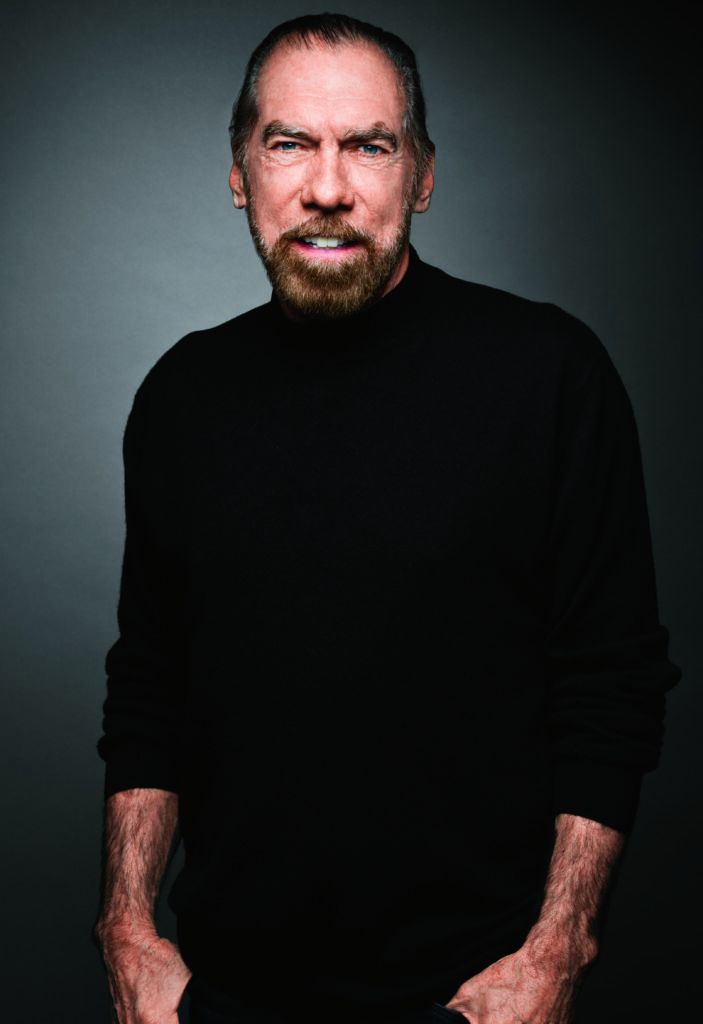
His signature ponytail, sleek all-black attire, and cool essence don’t typify the average billionaire. Which is exactly how John Paul DeJoria, who is not your average billionaire, likes it. Even though he’s ranked as #110 in the Forbes 400 billionaire list, and his net worth is estimated to hover way beyond $4 billion, he’s publicly stated that he will give away half his fortune in his lifetime in The Giving Pledge along with Warren Buffett, Bill Gates, Ted Turner, and other pals. “If you have a lot and you take care of your family and a few generations to follow, and there is plenty left, why not take care of others on the way and make the world a better place because you were here?” says John Paul DeJoria about philanthropy, which is very important to him.

His new book, Success Unshared Is Failure, is an inside look at the legend the man has built through his astute business acumen, and it’s a page-turner for anyone lucky enough to know him, and for those who can be inspired by his life and work wisdom.
He’s given back his entire life and, in 2010, created the Peace Love & Happiness Foundation, which invests in charities supporting sustainability, social responsibility, and animal-friendliness. It is an annual motorcycle ride to raise money for a local children’s shelter and families of police officers and firefighters killed on duty. Then there are his initiatives, including traveling with Nelson Mandela in 2010 to sub-Saharan Africa to help feed over 17,000 orphaned children, and that same year, his company, Paul Mitchell, helped provide over 400,000 life-saving meals for the children. He has also supported Grow Appalachia, a movement that helps restore the relationship between people and the land through non-profit gardens in Kentucky.
With his laundry list of professional and humanitarian efforts in mind, it’s still easy to remember that he’s a normal guy from very humble circumstances… who just happens to be a very high performer. His well-reported achievement theory, which he shares, is simple: success unshared is failure, a tenet rooted in his upbringing.
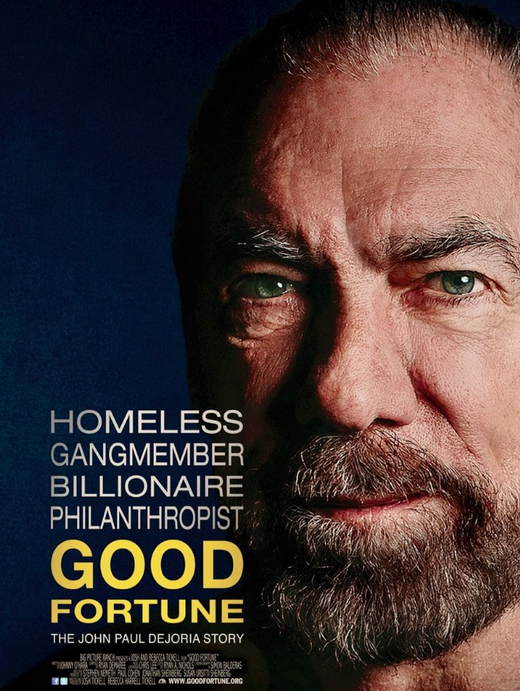
John Paul DeJoria’s Great Good Fortune
The documentary film Good Fortune, available on streaming, tells his inspiring life story and shows how he uses business to make the world a better place. It’s the rags-to-riches tale of conscious capitalism. As DeJoria shares, “Conscious capitalism is also known as ‘the triple bottom line ’: people, planet, and profit.” It reveals the secret to the success of one of America’s most celebrated entrepreneurs. It illustrates how DeJoria spent his life creating back-to-work programs for the homeless, fighting whale poachers in the Arctic, and working on more than 100 other philanthropic ventures.
A hard-knock life is what John Paul DeJoria was born into, yet he turned it around to represent the hard knocking he would do on doors, which began his successful path to riches and fame and, along the way, has made the planet a better place through his efforts. Born on the mean streets of a pan-ethnic East Side Los Angeles neighborhood months before D-Day 1944, he and his brother were raised by their single mother when his parents divorced at the age of two (he refers to his mother as his mentor in how she operated her life). “We didn’t know we didn’t have anything, and we had nothing, yet we were happy because we didn’t know any better,” he recalls. He soon learned to make things happen for himself, and he and his brother began selling Christmas cards at nine, which progressed to the selling of newspapers. You can tell much about a person when you learn what their first job was, and for DeJoria, his salesmanship set the tone for his life.
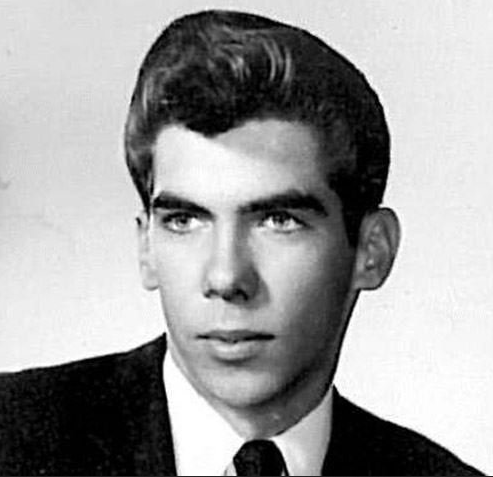
After graduating high school where he was in a street gang, then enlisting a four-year stint in the armed forces, DeJoria knew his future would lay in his sales talents. “One thing about the Navy is that it shows you how we ordinary people can work together as a team and achieve extraordinary results, so I credit that a lot with how I work with people,” he says. It also reflects the kind of person he likes to have on his team in his companies, saying, “Those who are enthusiastic about everything they do, and what they say is positive, is very important.” His personality has driven his fortune, and for anyone who knows DeJoria, his positive attitude permeates every room he enters and informs his entire theory of success, which came in handy as the rollercoaster ride of his life ensued.
School Of Life
Working for Redken Haircare products, he lived in Austin for two years in the 1970s selling the shampoo from his trunk to salons, and then left due to a disagreement with the company on its business strategies. As with any Hollywood-esque rags-to-riches story, tough times followed, and DeJoria was briefly homeless, living out of his car. “When you’re so down and out, you either stay there and say, ‘oh poor me,’ or immediately say, ‘what do I do to get out of it?’ Then, you immediately start doing whatever you have to do to get out of it,” he acknowledges.
Feeling he could create a better hair product with his friend, hairdresser John Paul Mitchell, they launched John Paul Mitchell Systems hair care in 1980 with a $700 loan. He became the face of the brand in ads and TV commercials in the 1980s as well as his model/actress wife Eloise, and together they have been the face of the brand in campaigns shot by pop culture reflectors Annie Leibovitz and Norman Jean Roy. The company’s sleek black-and-white product packaging, rare in the neon-laden Reagan years, was based purely on budget constraints, not the cool factor of less is more. The reason? It was simply cheaper to produce and stood out more on shelves worldwide. Shrewd business decisions like that have helped build an empire that now represents 100 products in over 87 countries, along with hundreds of Paul Mitchell schools for hairdressers. That era of big hair created even bigger fortunes for the company and DeJoria, who bought out his partner, Mitchell, when he became ill in 1988 and died in 1989. Instead of going public, the company remains the largest privately held beauty company in the world.

Also, part of DeJoria’s success is hiring people who can do more than their own job. He admits the presidents of his companies are, in his words, “much smarter than I am.” He continues, “When we started Paul Mitchell, six months into the business, we could only hire one person. That person, Shirley Waugh, became the receptionist, the bookkeeper, the shipper, and the order taker… she did everything so I could get out in the field. She did ten jobs. So, as we hired, we looked for people who could do more than just one thing. And the result is, we have never laid anybody off in our history.” That is a business feat that would surely qualify to be listed in the Guinness World Book of Records and DeJoria reveals, “Our turnover, due to employees’ life changes, has been less than fifty people in thirty-four years. Less than fifty people,” he restates. “We treat our people the way we would want to be treated. And that’s very important.”
Another secret he confides about his success is straightforward advice: “Do your job the way you would do it if the person who owns the company was watching you every minute, but there’s nobody around.” DeJoria also believes in rewarding great talent. He and his family’s Christmas parties in Malibu are legendary. In fact, they truck in several tons of snow to turn the Tuscan-inspired estate into a slice of Aspen-meets-State Fair, with all the points of interest, food, cocktails, and holiday merriment for the lucky ones invited to attend. Having been a guest many times, I can attest it’s a one-of-a-kind party, with plenty of celebrities, the DeJoria’s friends, at every turn.
Spirit-Filled Talent Of John Paul DeJoria
From the go-go 80s, the mogul would climb toward wider success – and recognition. Proving that his success wasn’t limited to the beauty realm, he co-founded Patron Tequila in 1989 and it grew to where almost three million cases are sold a year, practically revolutionizing the spirits industry for luxury brands. The company also offers Ultimat Vodka and Pyrat Rum. In January 2018, Patrón was sold to Bacardi, one of the world’s largest privately held spirits companies, for $5.1 billion. Then there’s John Paul Pet, conflict-free DeJoria Diamonds, water companies, breweries in Germany, and he was even an original investor in the House of Blues restaurant-and-club chain. The list goes on about DeJoria’s instinct for a smart business deal.

Yes, DeJoria invests in what he believes in, plain and simple. At one point in the 2000s, he also founded ROK Mobile. DeJoria believes that everyone should have access to a competitive rate for phone service and 10 million songs. Usually, DeJoria isn’t wrong with the business endeavors he undertakes. After all, he is in the business of taking care of people who take care of themselves.
Naturally, he and Eloise strongly believe in family and take pride in their children and how they have raised them. Most of their children are in the family business, and his insight about raising his youngest son, John Anthony, is timely. “Today is so different from years ago when parents said, ‘do it this way’ and you did everything they said,” he recounts. “It’s just not that way anymore. Kids are too smart. My son is too smart. If you want them to do something and if you tell them ‘do it because I want you to do something,’ then your kids resent you. I feel that if you ask your kids to do something, let them know why you’re doing it that way. If they say that isn’t the right way to do it, at least listen to them,” DeJoria offers on stewarding the next generation for success, as it learns from the master himself on becoming self-reliant stewards of the globe.
The next time you’re in a room with John Paul DeJoria, let him know how valuable his business and philanthropic insight have been to the planet. I’m betting he won’t be surprised, but you will, at the meaningful type of encounter that makes John Paul DeJoria the likable leader he is, and the mentor he is, to so many of us.
10 Life Lessons We Can All Learn From John Paul DeJoria
Some people build fortunes. Others build legacies. John Paul DeJoria has managed to do both.
From selling newspapers as a child and experiencing homelessness to creating billion-dollar brands like Paul Mitchell and Patrón Tequila, DeJoria’s journey proves that success isn’t determined by where you begin—it’s shaped by the values you refuse to abandon. Throughout his career, he’s remained committed to philanthropy, integrity, and treating people with dignity, making him one of today’s most admired entrepreneurs.
Here Are 10 Timeless Lessons We Can All Learn From John Paul DeJoria...
1. Your Circumstances Don’t Define Your Future
Growing up with very little and later living out of his car, DeJoria never viewed hardship as a permanent condition. Instead, he saw every setback as temporary and every obstacle as an opportunity to begin again.
Life Lesson: Your current situation is only one chapter, not the entire story.
2. Persistence Beats Talent
Before success arrived, DeJoria heard “no” more times than most people could count. Yet he continued knocking on doors, believing the next opportunity might be the one that changed everything.
Life Lesson: Success often belongs to the person willing to hear “no” one more time than everyone else.
3. Treat People the Way You Want to Be Treated
One of the hallmarks of DeJoria’s companies has been remarkable employee loyalty. His philosophy is refreshingly simple: respect people, reward hard work, and create a culture where employees feel valued.
Life Lesson: Great businesses are built by great people, and great people stay where they’re appreciated.
4. Success Means Nothing If You Don’t Share It
The title of his book, Success Unshared Is Failure, perfectly captures DeJoria’s philosophy. Through philanthropy, environmental initiatives, and charitable giving, he’s demonstrated that wealth carries responsibility.
Life Lesson: The greatest measure of success isn’t what you accumulate, it’s what you contribute.
5. Stay Humble, No Matter How Successful You Become
Despite building multiple billion-dollar businesses, DeJoria remains approachable, grounded, and genuinely interested in others. Humility has become one of his greatest strengths.
Life Lesson: Confidence earns admiration. Humility earns respect.
6. Think Long-Term
Rather than chasing quick profits, DeJoria has consistently focused on building brands that last for generations. His patience has produced extraordinary results.
Life Lesson: Lasting success is built over decades, not quarters.
7. Hire Character Before Credentials
DeJoria believes enthusiasm, integrity, and a positive attitude often outweigh experience. Skills can be taught. Character cannot.
Life Lesson: Surround yourself with people who elevate everyone around them.
8. Never Stop Giving Back
Whether supporting children’s charities, environmental conservation, veterans, or disaster relief, philanthropy has never been an afterthought in DeJoria’s life—it has been central to it.
Life Lesson: Generosity isn’t something you practice after becoming successful. It’s part of becoming successful.
9. Stay Curious and Keep Reinventing Yourself
From hair care to premium tequila, mobile technology, diamonds, spirits, and countless investments, DeJoria has never allowed himself to be defined by one success.
Life Lesson: Reinvention keeps both businesses, and people, relevant.
10. Lead With Purpose
Perhaps DeJoria’s greatest accomplishment isn’t the fortune he’s built but the lives he’s impacted. His commitment to conscious capitalism demonstrates that doing well and doing good are not mutually exclusive; they’re inseparable.
Life Lesson: Build a life that creates opportunities for others, and your own success becomes infinitely more meaningful.
Final Thought
John Paul DeJoria’s story is far more than a classic rags-to-riches tale. It’s a blueprint for living with resilience, generosity, optimism, and purpose. His journey reminds us that true wealth isn’t measured solely by what’s in your bank account, but by the lives you’ve improved, the opportunities you’ve created, and the legacy you leave behind.
As DeJoria has proven throughout his remarkable career, success is sweetest when it’s shared.




There is definitely a lot I didn’t know about DeJoria.
Thanks for the reply. It’s an honor to profile John Paul DeJoria!