 Curated Texan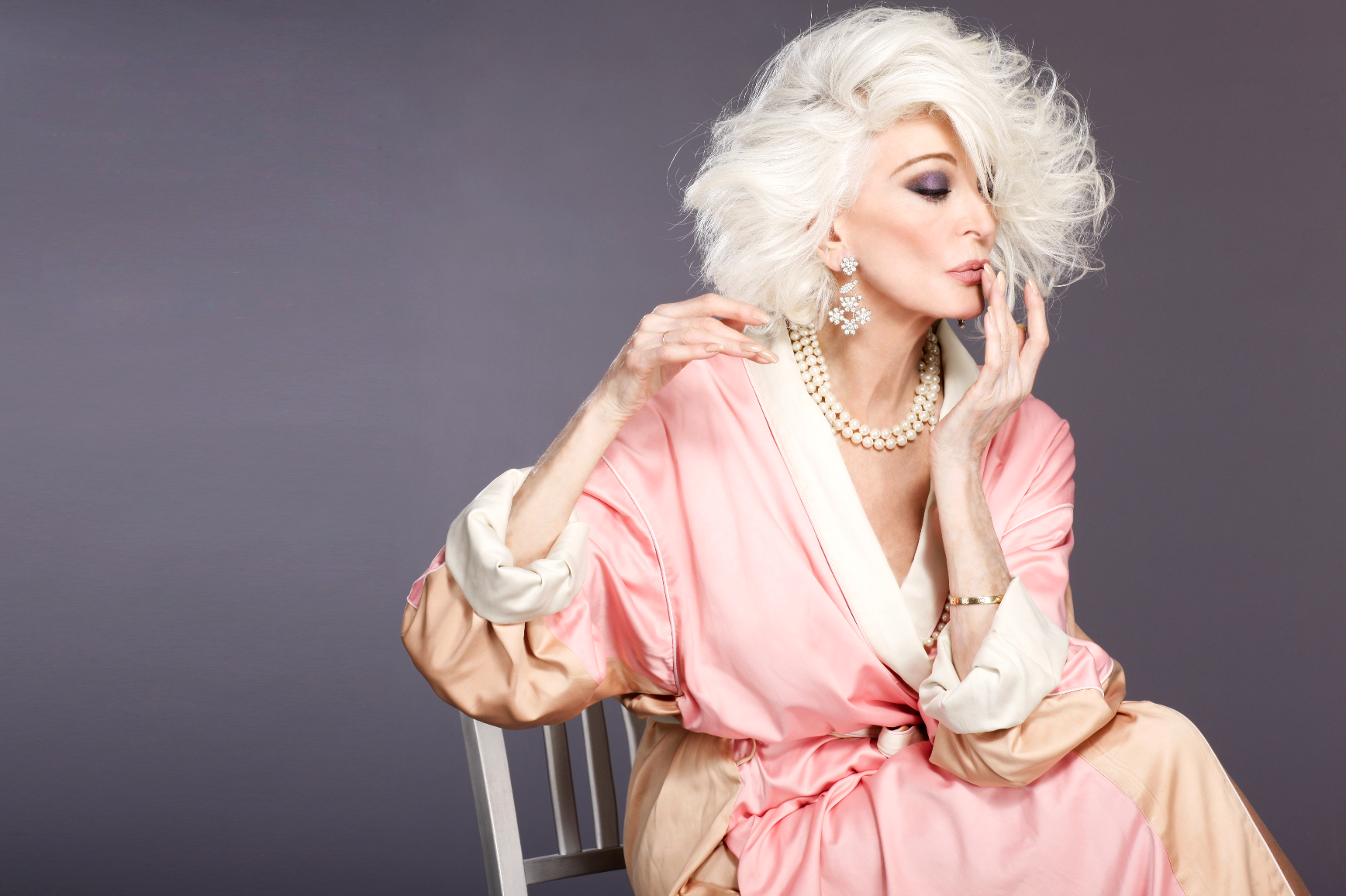
Her Enduring Influence in High Fashion Through Seven Decades of Fashion Reflects Her Timeless Grace
By Peter Martino Portrait photography by Fadil Barisha
Archive photography courtesy of the private collection of Carmen Dell’Orefice
There are supermodels, and then there is Carmen Dell’Orefice. At ninety-four, she is both muse and myth, the woman who launched a thousand magazine covers and, in doing so, redefined the very notion of timeless beauty. For over seven decades, Carmen has been a fixture of elegance and discipline; her face an evolving masterpiece that has graced the pages and covers of Vogue, Harper’s Bazaar, and countless advertising campaigns. But beyond the lens, she has lived a life as rich, dramatic, and unapologetically stylish as any of the couture gowns she has donned.
When I arrive at her Park Avenue apartment, the first thing that strikes me, beyond the hauteur and poise that seem to shimmer around her like perfume, is her presence. Carmen greets me at the door, wearing tailored Ian Garland trousers for Hardy Amies, a crisp Jackie Rogers blouse, and a sculptural Cho Cheng jacket that could easily hang in a museum of modern art. To complete her ensemble, she wears select pieces of jewelry she has collected over the years.
Her silver-white hair, swept back with austere precision, frames a face at once serene and fierce. She does not look her age, but then again, Carmen Dell’Orefice never has.
Inside, her world unfolds like a glamorous memory box of the 20th century. Her living room is an eclectic sanctuary; a swirl of animal prints, hot-air balloon motifs, and shelves stacked with books and framed memories. The walls whisper stories through portraits by Salvador Dalí, Vidal Quadras, and David Downton, while a grand ebony piano, its lid glinting under soft afternoon light, anchors the room. On it are photographs chronicling a lifetime of beauty and brilliance: David Susskind (who died a week before their wedding), Norman Levy, Norman Parkinson, Liza Minnelli, Bobby Short, and Richard Avedon, among them. Each image is a love letter to a bygone New York, to art, and to the people who shaped her extraordinary journey.
Born in 1931 in Manhattan to a concert violinist father and a dancer mother, Carmen’s early years were defined by motion, borough to borough, lesson to lesson, always chasing the next dream. A scholarship to Ballet Russe was cut short by rheumatic fever, but the grace of dance stayed with her forever, visible in every frame she’s ever occupied. Modeling, as she puts it, “found her,” and the rest is the longest, most elegant career in fashion history.
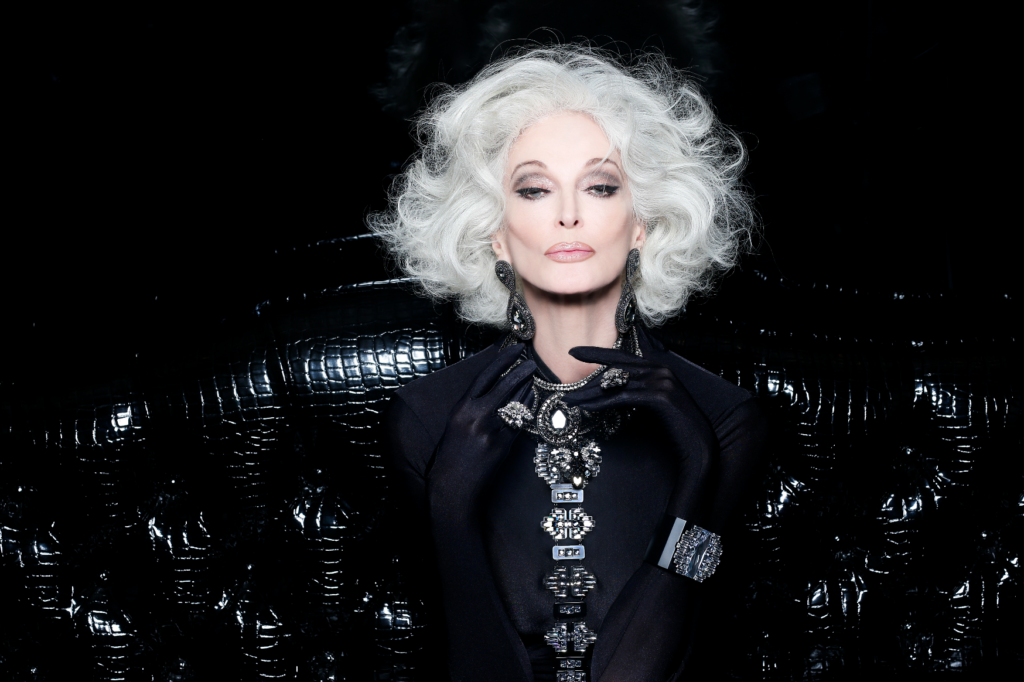
Here, in an exclusive, rare, and candid conversation with her dear friend Peter Martino, the incomparable Carmen Dell’Orefice reflects on love, legacy, and the art of aging beautifully.
Did you choose modeling, or did it choose you? What might you have done instead?
It chose me. I did not attempt to pursue modeling. Through a series of circumstances, it found me. I grew into it, like people grow into their skin. If I had not pursued modeling, I probably would have become a designer because I love to sew and work with fabric…and I also have a real aptitude for science, which would have been another, completely different choice.
First major model booking?
It was a series of bookings. My first was at 13 for the brilliant photographer Clifford Coffin for Vogue. The second day, I worked for the great photographer Horst P. Horst, and on the third day, I worked with Cecil Beaton. The fourth day, Irving Penn. I would say the first week of my modeling career with such major bookings was a good start.
What was your first major cover, and what was it like?
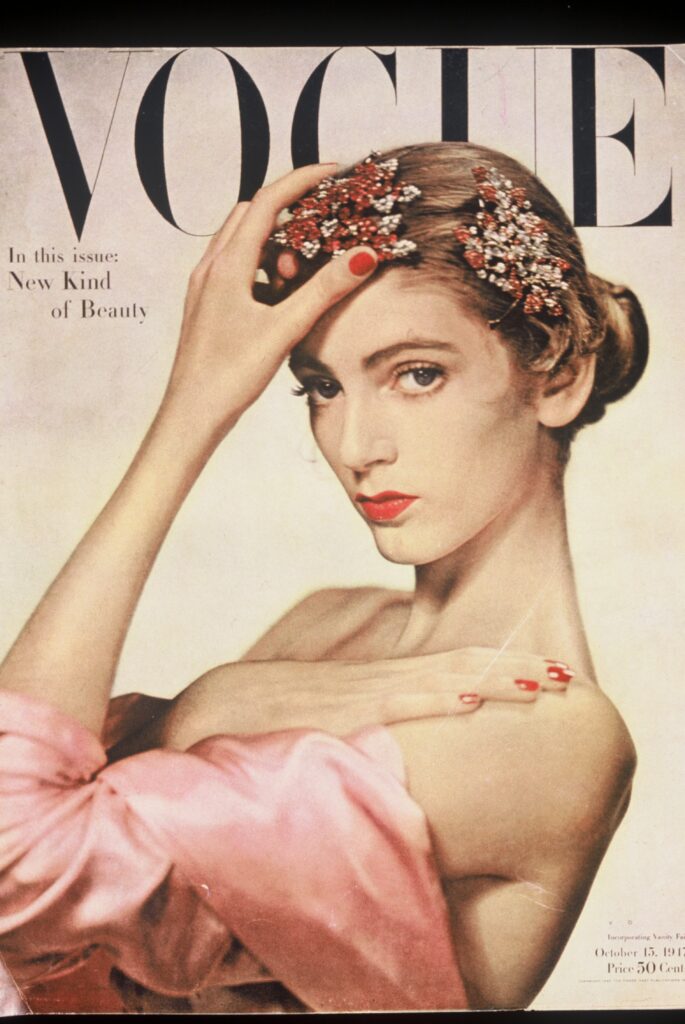
My first Vogue cover came in 1947, shot by Irwin Blumenfeld, and appeared two years after I had been appearing on many Vogue pages. And you know, I didn’t like it because I thought I looked like a little boy on that cover. I kept looking at the stacks of magazines on 57th Street and 7th Avenue, where I got off the bus, and saw myself on the cover of one of the stacks, and I kept looking at the covers underneath, hoping the next one would be better than the one at the top. I just did not like the photograph then, but I see what it means graphically and artistically today.
Were you as highly paid by today’s standards?
What I experienced in 1945 at the beginning of my career was that the editorial money I made so altered my mother’s and my lives in a positive way that it seemed like a lot of money. It was $60 a day, and our rent was $30 a month. Because I had become a true professional, had inherent skills, and learned the business, I was compensated as I developed. In the late ’40s and early ’50s, I was the highest-paid model in the world, earning $300 an hour and $2,500 a day modeling for Vanity Fair lingerie with the extraordinary photographer Mark Shaw.
What other benefits did modeling provide that you may not have otherwise had?
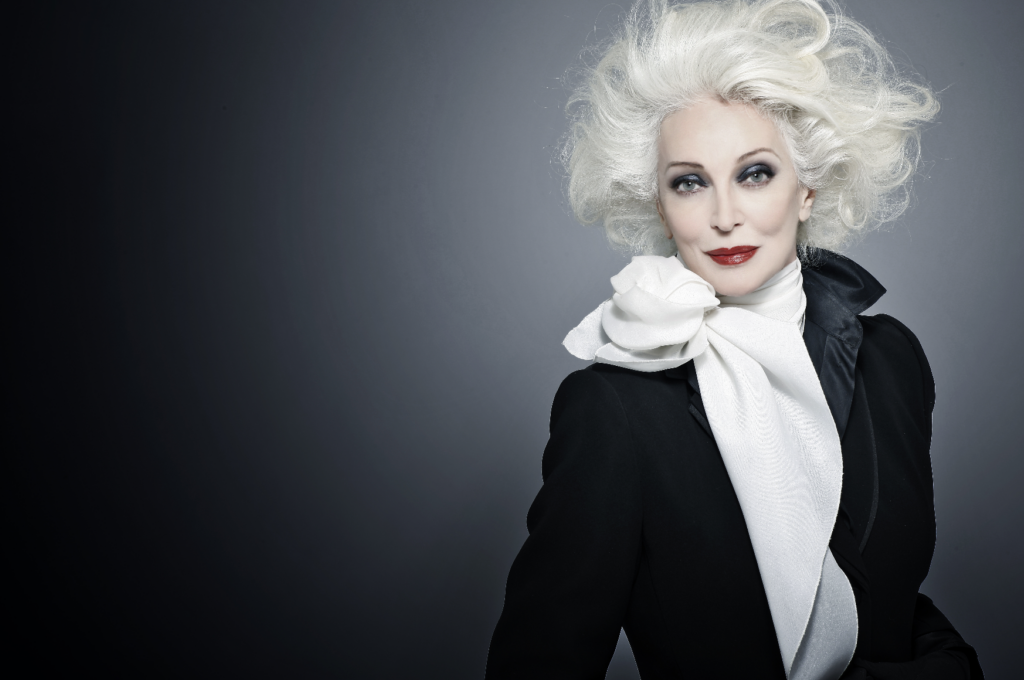
The other big benefit of modeling was having a surrogate family composed of some of the most creative people in existence. My constant companions were Cecil Beaton, Richard Avedon, Horst, Blumenfeld, and the 19-year-old Francesco Scavullo. I was loved and nurtured by extraordinary, strong women: Eileen Ford, Frannie McLaughlin, Maria Martell, and Lillian Bassman. So, I have to say my real mothers and fathers were photographers.
Modeling also gave me the world on other people’s money. I still adore travel, and thanks to Stanley Marcus of Neiman Marcus, I was sent on my first around-the-world job in 1950 at 19 years old. Thank you again, Stanley. I will always be grateful.
What would be a highlight event for each decade, starting from the 1940s?
In the 1940s, it was my first week working, thinking how lucky I could be to start with the greats of the fashion photography business. How fortunate that I saw something I became.
During the 1950s, it would have had to be doing three Paris collections… the first with Gleb Derujinsky, and later Avedon. They were highly visible and important shoots, on location with the most extraordinary clothes and teams. Another very important event from the late 1940s through the 1950s was my becoming the model for Vanity Fair lingerie. I broke the barrier between fashion and advertising photography. I was the only model doing both and became the highest-paid model in the world at that time.”
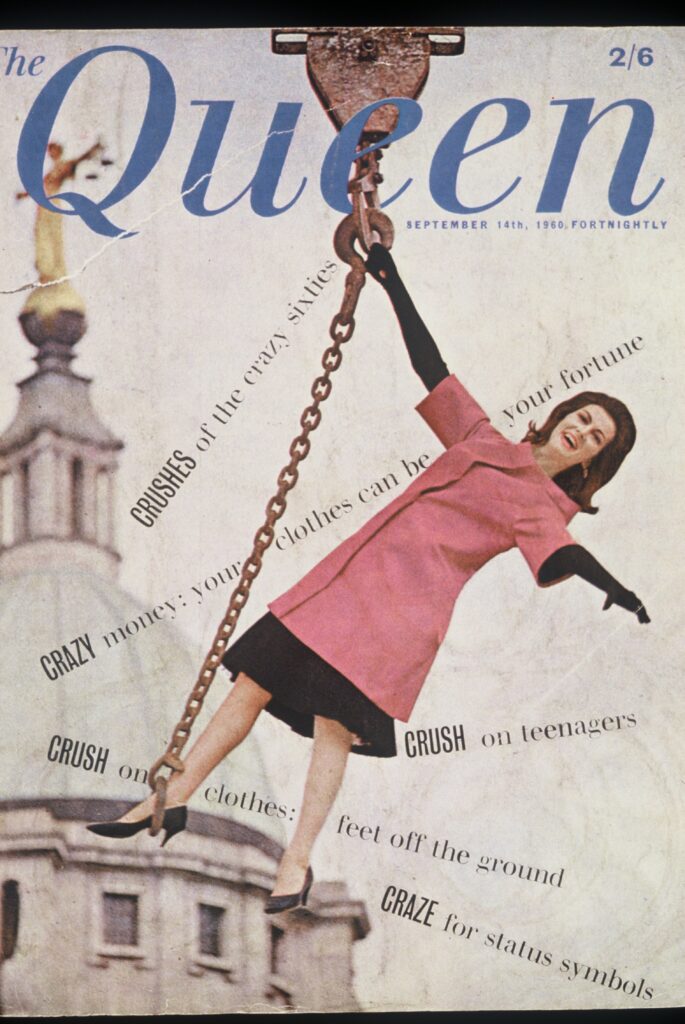
In the 1960s, Twiggy happened. Designers thought you had to be either Bridget Bardot or Twiggy. And I was neither. I put my career on the back burner, which allowed me to try acting. My first film, made in 1964, was Last of the Secret Agents, a spy spoof starring Nancy Sinatra and the comedians Allen and Rossi. I received my SAG card of which I am very proud.
I did a very important photo shoot with Norman Parkinson in the 1970s at San Simeon in California, for Town & Country, that resurrected my career. To get it approved, Parkinson took me to Paris for a French Vogue shoot because he knew Europeans accepted women aging well and that they even appreciated it. Parks, as he was called, used this timeless image he created in Paris to sell me to Frank Zachary and Nancy Gardner of Town & Country.”
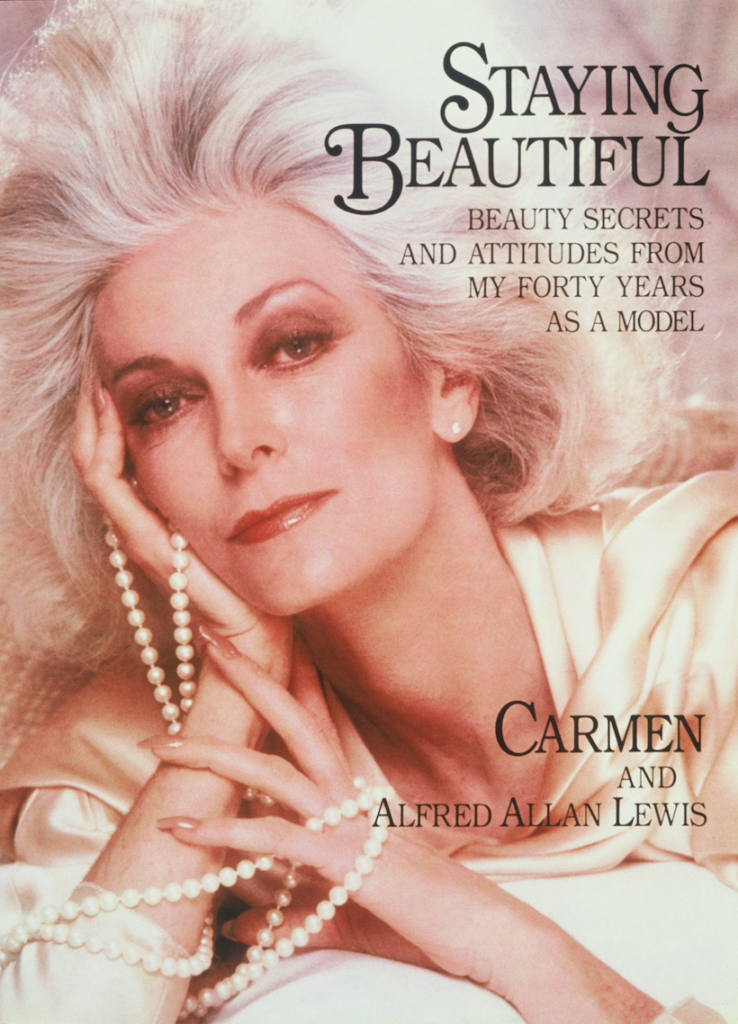
My book, Staying Beautiful, which I wrote with Alan Lewis, was published in the 1980s. Alan approached me about doing a book, and I replied, “I can’t spell!” His retort was, ‘You idiot, I’ll write it, you lived it.’ Through Alan, I met Larry Ashmead, head of Harper & Row. Because of that duo, I realized how much I had accomplished and how much I do know. It opened a new and exciting world. During the book tours, I met producer David Susskind and fell in love with him. He had more than golden ears; he could listen to people. We could talk to each other, and I still miss him.
In the 1990s, Norman Parkinson and I finally got together as a romantic couple. For 40 years, we had this dance of mutual desire. Park’s wife had died, and his son, Simon, permitted him to pursue me. I had become a runway model in my 60s for Galliano, Gaultier, Mugler, and Guy Mattiolo. The Dutch put me on a postage stamp, and this all the while I was collecting Social Security. My life savings had been lost in the wrong investment hands. After bitter arbitration, I was to regain two-thirds of it. Worth magazine did a long article on the events, featuring me as a warning to older people to take charge of their finances.
I have been very active. I did a major ad campaign with Isaac Mizrahi for Target. Banana Republic celebrated my 70th birthday by using me holding a cake with candles for their ads. I added another movie, along with the ones I did for Woody Allen, called Teacakes and Cannoli, starring Abe Vigoda and me, and won a minor New York Film Festival best supporting actress award.
Let’s discuss your style. What is fashion and or style to you? Does fashion play an important part in your personal life?
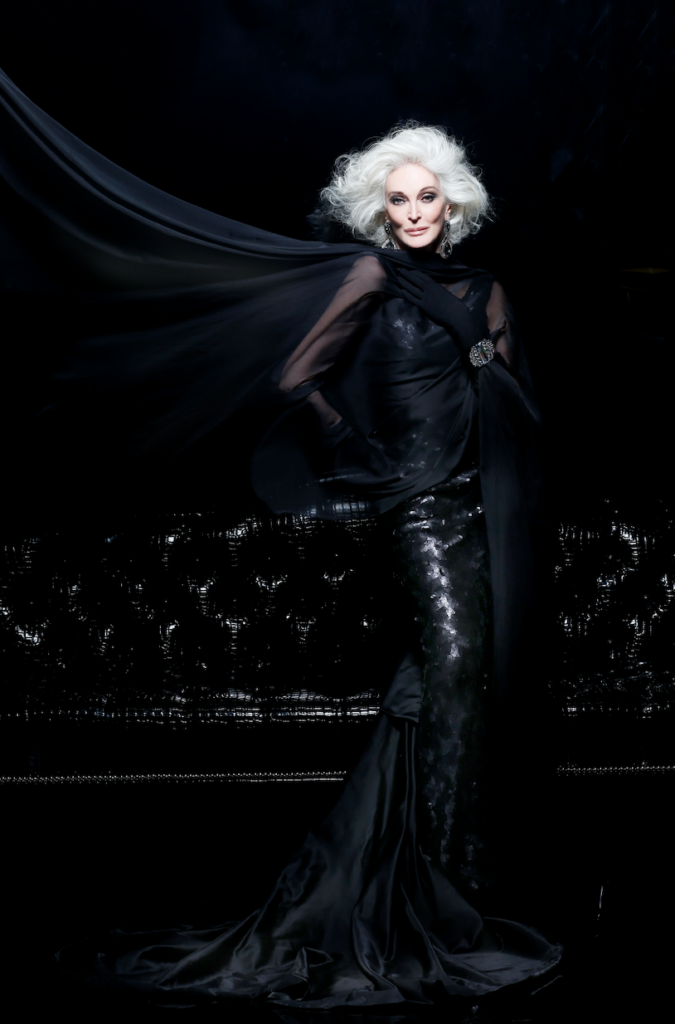
I dress to be invisible yet noticed. I don’t believe in shock value, ridiculous costumes, or outrageous theatrics. Every event does not need to be a costume ball. The true beauty of the individual should be most evident. Comfort has become paramount to me, along with a beautiful fit, wonderful fabrics, and a sense of elegance and classic style.
Who are a few of your favorite designers, past and present, and what qualities made those designers memorable?
Mainbocher was perfection to me. He designed with the most magnificent fabrics and an unequivocal cut. The Master, Charles James, brought fantasy to life. He was the greatest engineer of all time. Charlie’s dresses could stand alone as sculptures. I could never afford him, but I loved borrowing his pieces. Halston’s work was simplicity of line at its best. I loved wearing his pieces and wear many to this day. His clothes will always retain their integrity. Chanel was a true innovator and freed women. The clothes were always beautiful to look at, but never fit me well.
As for current designers, I wear and appreciate Jackie Rogers. She is a protégé of Chanel and does beautiful, understated clothes. Ian Garland for Hardy Amies designs the most exquisite and perfect pantsuits. I adore Cho Cheng, a brilliant young designer channeling the best of the old couture for today’s women. The designs of Australian jeweler Tony White are extraordinary. I have commissioned pieces from him and have even posed as the face of his company.
You have worn the most extraordinary clothes produced in the last 60 years. Are there any memorable pieces you would like to have?
Yes, I have always wanted a pleated silk Fortuny column. To me, it is the most luxuriously simple and enduring of designs. It is the epitome of elegance. I would also love to have the Mr. Pearl [the iconic Parisian corset designer] couture flesh colored satin bustier he has been working on for the last eight years for me. A favorite piece I now have is a stunning multi-hued blue bias-cut chiffon gown with long sleeves, designed for me by Thierry Mugler. It is superbly fitted and moves wonderfully when dancing. I have longed for a dress like this for years.
Let’s discuss some more about the people who shaped your career. What was it like working with the great fashion editor Diana Vreeland?
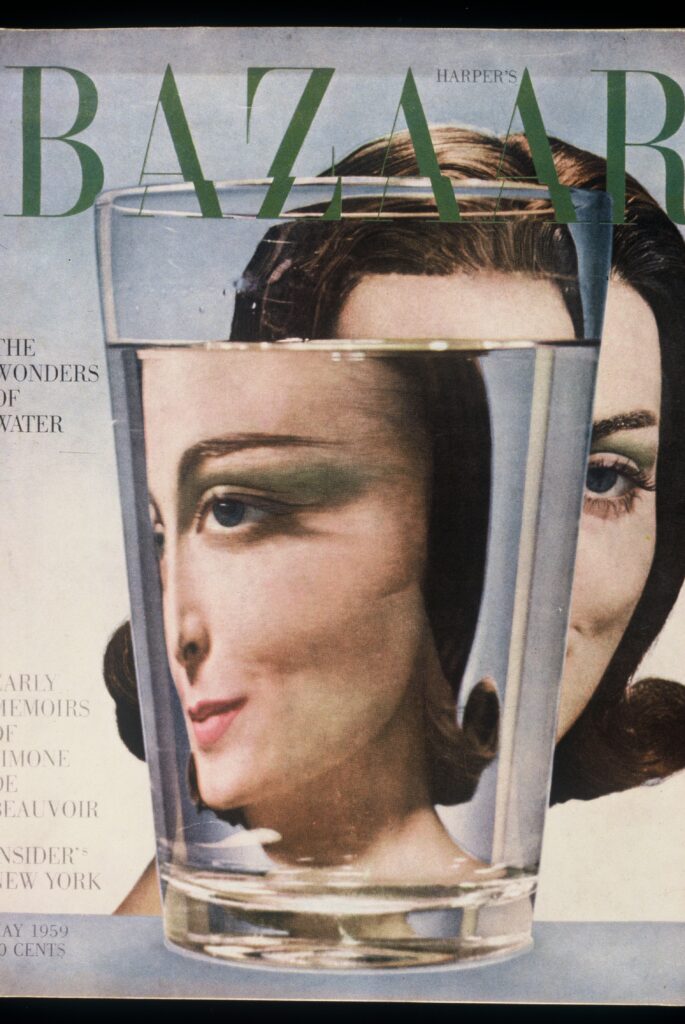
I came into contact with Diana after I finally bridged the gap from Vogue to Harper’s Bazaar, which is where she was then. At the time, you could not work for one if you worked for the other. She was the most extraordinary woman because she developed her own vocabulary, was a kinetic communicator, and was a true visionary. When you went to her office, the feeling was always warm and welcoming. One particular time I recall, she exclaimed, ‘You are divine, look at you, darling. You are so beautiful. Now come and sit here in this chair.’ So, she stood behind me with her hands around my neck. ‘I want you to stretch your neck,’ she said as she measured my neck. ‘I will measure you next week. If your neck is an inch longer, you are going to the collections in Paris,’ she exclaimed.
Somehow, the next week, she convinced herself that I had stretched my neck and she sent me to my first Paris collection with the astounding photographer Derujinsky for Harper’s Bazaar. For that, I am truly indebted. Diana was in every sense a true original.
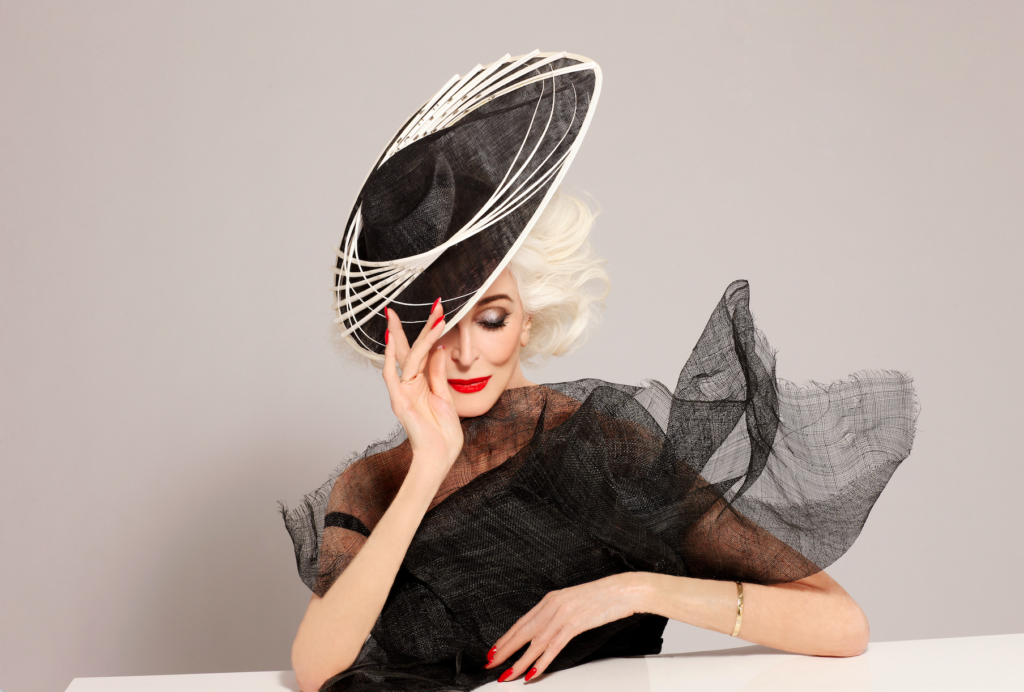
What was it like to work with Richard Avedon and Norman Parkinson, the photographers most associated with you?
Avedon was a great director; he had the most marvelous, innovative visual imagery. With Richard, there was no wasted direction; he always saw the image in his mind. He was a brilliant technician. Avedon introduced color into fashion photography and was a master in both color and black-and-white. He was great fun, creating a mood through the music he played during the shoot. He also taught me more about my face and how to work with it more than any make-up artist or art director I knew.
Parks (Parkinson) was patriarchal because he truly cared about the whole crew, and he always brought the most glorious sense of humor with him. He innovated the use of social climate and environment in fashion images, surrounding the model with them. He was a genius because he subjected us to the worst conditions, shooting underwater, in tropical jungles, and on the tops of urban buildings, when appropriate. It could also be the most sublime palace or locations, all for the most evocative visual effects. Parks loved all women, and it showed in his extraordinary images.
Are there other photographers whom you thought had greatness?
Yes, Irving Penn, Richard Heimann, and Diane Arbus. Penn looked after me; he had a real concern for my well-being… even sending me to the doctor when he thought I was too thin. He allowed me to be a child and made the shoots fun. He had the most organized mind and created stunning photographs.
Richard Heinmann, my second husband, was wonderfully gifted. He photographed me throughout our relationship, and his love is evident. It was like being able to dance to special music, better even than sex. The high was undeniable, the product beautiful, and I got paid for it. I still see him and his lovely wife, Sally, and we share a warm relationship.
Diane Arbus was like a wonderful older sister, I was 13 to her 19, and she had just married her husband, Alan. After shooting, Diane would turn to him and say, ‘Is that all right, boy?’ and Alan would reply, ‘That’s good, girl.’ I loved working with Diane because she acknowledged my inner fantasy of femininity. When I saw the wedding gown photo, I exclaimed, ‘Is that me? It can’t be me!’ I thought it was the most beautiful image ever.
You must understand, I admire almost all the photographers I worked with; I knew them as people, not icons. They were like family; some were more special to me than others.
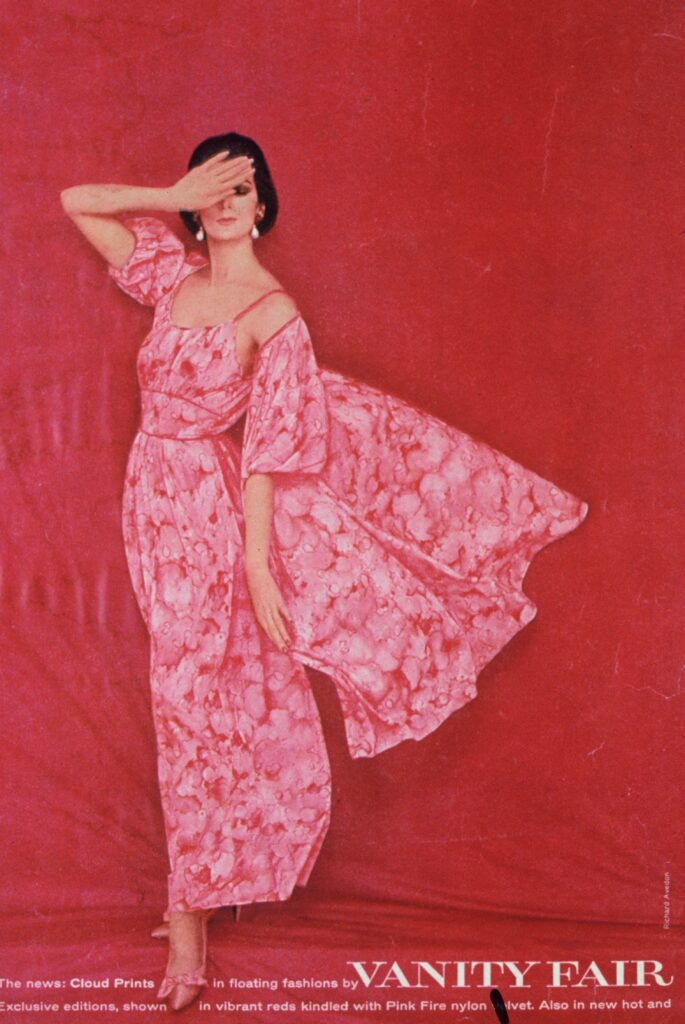
About aging in the beauty business, how has it changed, and how do you feel you contributed to that change?
American couture, fashion advertising photography, and I grew up together. The public has seen the whole business of fashion emerge, and because I have been a part of that for 70 years, people have seen me gradually age. I am always honest about myself, especially my age. I think I make it okay to wear makeup, dress up, feel sexy, and have white hair. Outside of a group of industry people, I do think attitudes have changed. People can be beautiful at any age.
Who do you consider beautiful, current, and past, and why?
Capuccine, the actress, was both tragic and gorgeous. And my godchild, Jessica Kronemeyer, is stunning. She keeps me up to date on all the latest trends.
As an inspiration for many men and women, who do you admire?
Many people have had an impact on me throughout my life. Many are famous, some are not. I admire people who care about children, the elderly, the homeless, and the poor. I admire medical researchers for their ability to give hope and find ways to alleviate suffering and illness. I devote a lot of time to supporting all of these causes, and all are dear to my heart.
However, four personal friends have been particularly inspiring to me: my closest friend, Margaret Hoffman; the models Sunny Harnett and Dovima; and the editor, Pamela Fiore.
Margaret was orphaned at 8, a film star in Germany at 16, and an escapee before 19. She was and is an extraordinary beauty, even at 90. Margaret was often mistaken for Heddy LaMar or Vivian Leigh. We were introduced by our husbands…we dumped the husbands but kept the friendship. She is the older sister I never had and a true, honest confidant. We have endured together.
Sunny Harnett, one of the most ravishing women ever, always looked out for me. When I was first married, Sunny said, ‘What do you mean you give your husband your checks?’ She said, ‘Stop doing that.’ I was so naïve that I did not know better. Sunny was the first to recommend me for the Paris shows, by suggesting me to Avedon. She was a selfless, fiercely devoted, and dear friend.
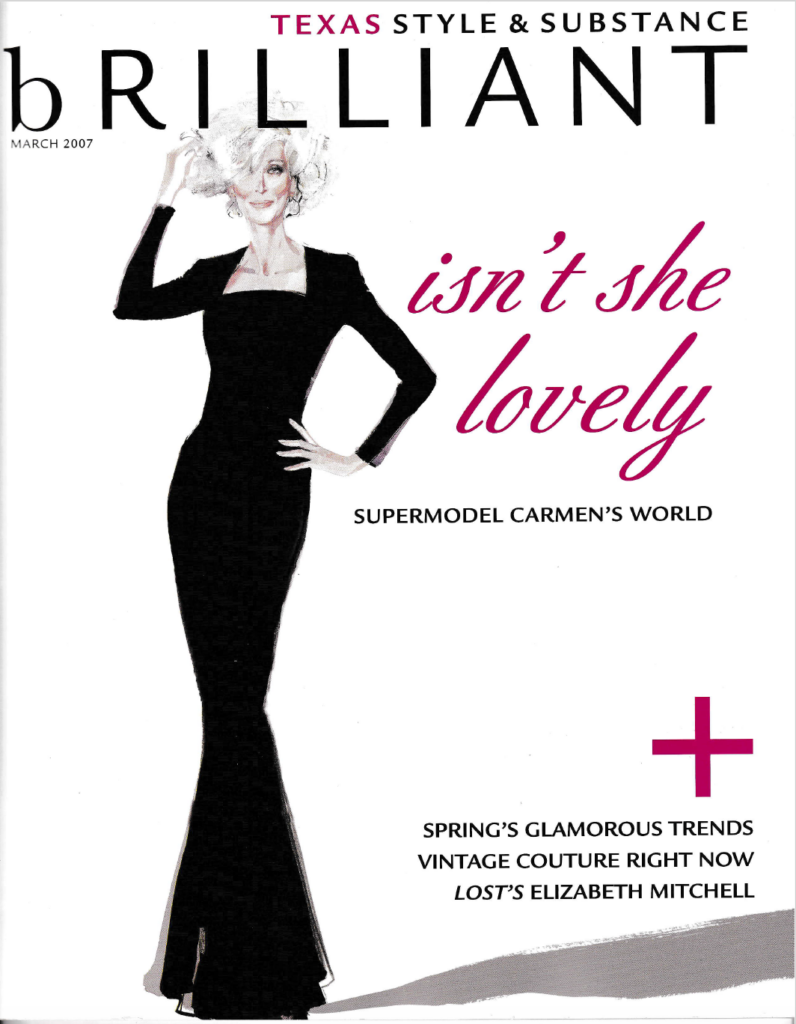
Dovima was like my little sister. She had the most beautiful soul and deep religious beliefs. Her inner beauty translated to her images. Until her death, I watched over and protected her. We retained a lifelong, cherished friendship, and she also had the best Brooklyn accent.
Pamela Fiore, (then) editor in chief of Town & Country magazine, has the uncanny ability to understand me. I am indebted to her for constant support and encouragement. I find her editor’s feature article a spot-on socio-political fashion statement that mirrors my own. She has become a giving mentor and a trusted patron.
Any goals that have eluded you?
Yes, being a housewife.
What is your greatest joy?
Enduring relationships and the new ones that create new memories.
You hold the record for the longest continuing modeling career, of over 70 years. What do you think contributed to your longevity?
If you don’t feel good, you don’t look good. I navigate my health through preventive medicine and maintenance. I maintain a challenging schedule that keeps me current and motivated. This, I feel, keeps me familiar with many generations. I also understand the process of fashion and advertising photography. I know how to give photographers what they need for the image they have a vision of, and I have the ability to connect with the public; as I age, so do they. It seems that for 70 years, I have always, by great luck, been in the right place at the right time, and I remain enthralled by what I do.
An Ageless Icon
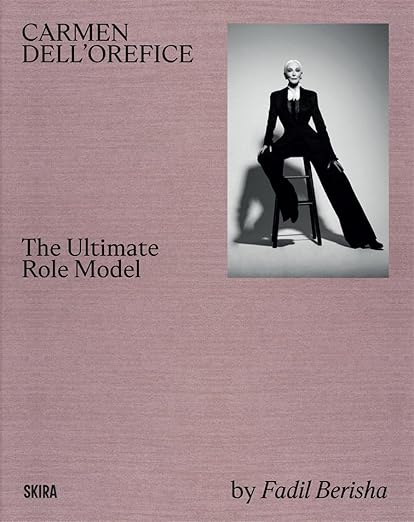
Reviewing our chat, I realize that Carmen Dell’Orefice has never been merely a model. She is a living archive of fashion’s most luminous eras; a woman who has outlasted trends, defied time, and maintained a sly, amused distance from the chaos of fame.
She has been a muse and mother figure, a lover and a legend, an actress and an author. She’s graced Paris runways in her sixties, shot campaigns into her nineties, and, through it all, remained committed to the belief that elegance is less about appearance and more about attitude.
“I dress to be invisible yet noticed,” she says. And perhaps that is her secret: the paradox at the heart of timeless style.
When I leave her Park Avenue apartment, the late-afternoon light catches her reflection in a gilt-framed mirror: poised, serene, utterly herself. After all these years, Carmen Dell’Orefice isn’t chasing beauty. She is beauty.