 Lance Avery Morgan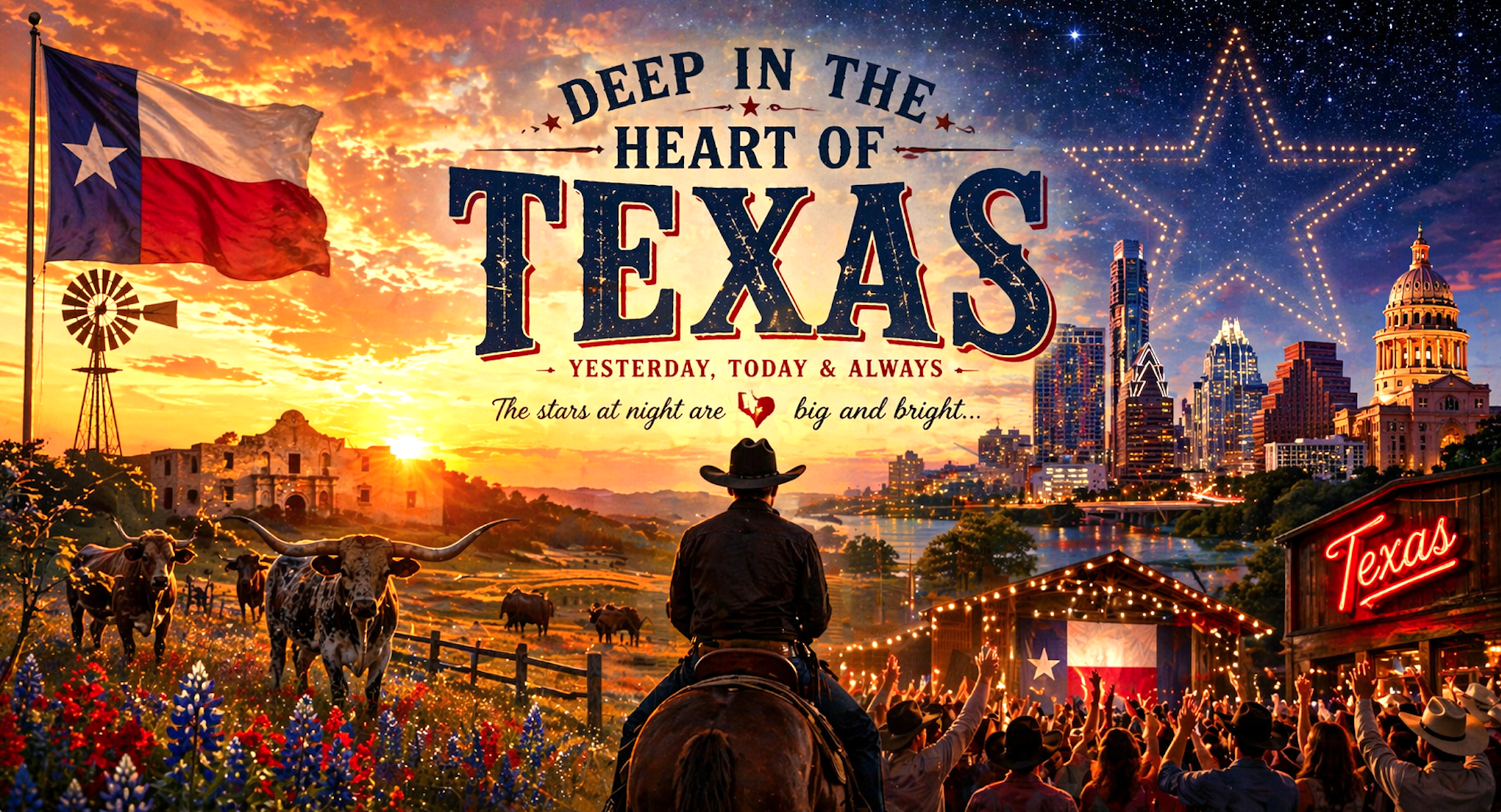
From World War II Morale Booster To Modern-Day Cultural Touchstone, The Iconic State-Loving Song Continues To Echo Across A Bold, Evolving Texas In 2026
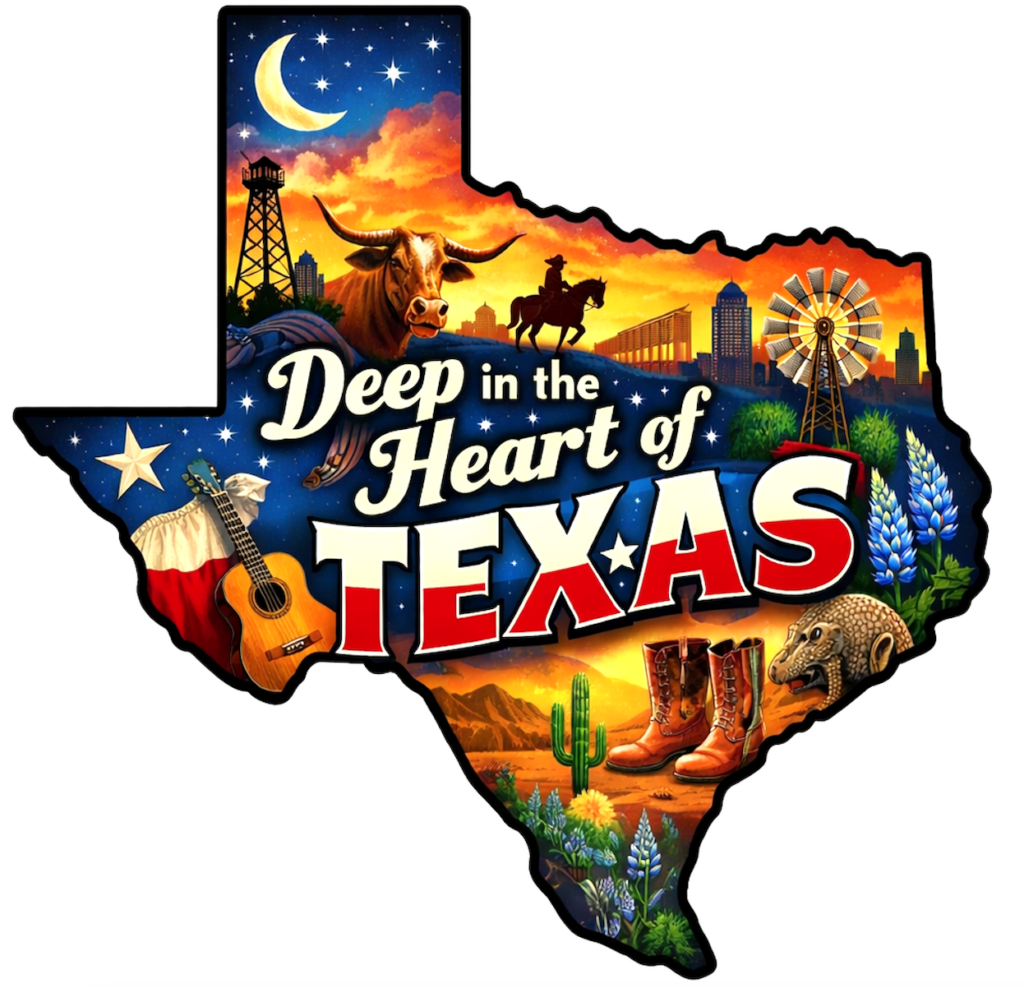
Photography created by Curated Texan
Few songs manage to be both a time capsule and a living, breathing anthem, but “Deep in the Heart of Texas” does exactly that. Born in 1941 and immortalized by artists like Gene Autry, Bing Crosby, and Perry Como, the tune quickly became a national sensation during World War II, lifting spirits on the home front and overseas. Its irresistible rhythm and participatory clapping made it more than a song… it became a shared experience, a reminder of home for soldiers and a rallying cry for unity. Today, in a Texas that is bigger, faster, and more globally influential than ever, its melody still resonates, proving that while the state continues to evolve, its heartbeat remains unmistakably the same, especially to our sixth-generation Texan, Lance Avery Morgan.
A Song That Became a State of Mind
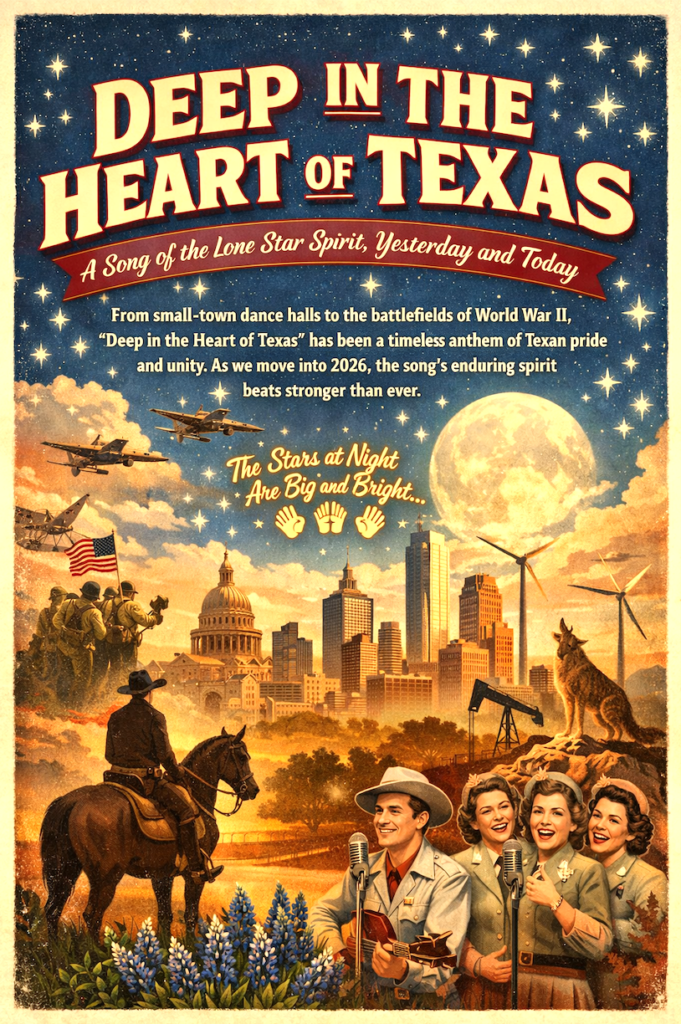
There are songs that entertain, songs that endure, and then there are songs that become a place. “Deep in the Heart of Texas” is firmly the latter: less a melody than a shared memory, less a lyric than a living pulse. First introduced in 1941, with music by Don Swander and lyrics by June Hershey, it quickly found its voice through a roster of beloved performers, from the easy warmth of Bing Crosby to the cowboy charm of Gene Autry, each helping it enter the American mainstream. Pee Wee Hermann even worked it into his 1985 comedy hit, “Pee Wee Herman’s Big Adventure.”
Why It Mattered During World War II
Timing, as much as talent, propelled the song into history. Released just as the United States entered World War II, the song became an instant morale booster. Its upbeat tempo, simple imagery, and, most importantly, its famous four-clap refrain made it interactive in a way few songs were at the time.
Written by June Hershey (lyrics) and Don Swander (music), it was an instant hit when it was released in 1941 and quickly became the unofficial anthem of Texas. The infectious melody and rhythmic handclaps between lyric lines invited audience participation, helping it become a staple of community gatherings and radio broadcasts.
On military bases, in USO performances, and over radio waves broadcast across continents, the song created a moment of joy and connection. For soldiers stationed far from home, it evoked a romanticized America: wide skies, open land, and a sense of belonging worth fighting for. For civilians, it offered relief: a few bright, rhythmic seconds of unity in an uncertain world.
It wasn’t just popular, it was pervasive. At one point, versions of the song reportedly dominated the airwaves simultaneously, with multiple recordings charting at the same time. That kind of saturation cemented it as more than entertainment; it became emotional infrastructure. Other songs at the time, like “Don’t Fence Me In” and “I’ve Got Spurs (That Jingle When They Jangle)” also promoted Texas in all its mid-century growth glory.
The Rhythm Of Recognition
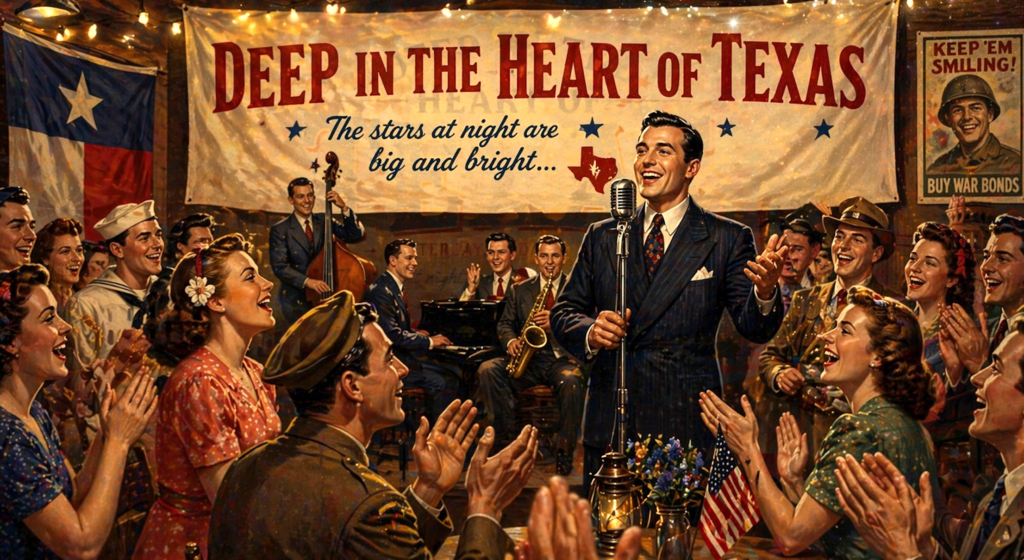
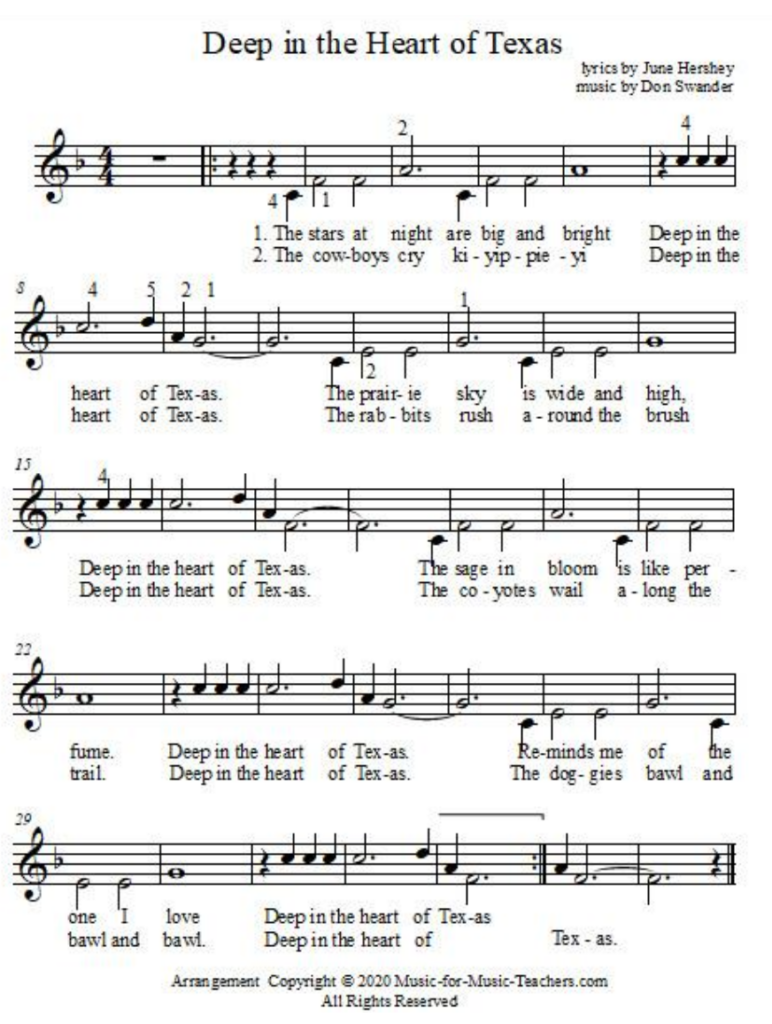
“The stars at night are big and bright…”
Before the line can even finish, hands instinctively clap; four sharp beats that echo across generations. It’s one of the most participatory moments in American music, a built-in ritual that collapses distance between strangers. In Texas, those claps aren’t just musical punctuation; they’re a signal. You’re home.
In 2026, that call-and-response feels more relevant than ever. Texas has become a crossroads of cultures, industries, and ideas, its population swelling, its cities evolving at breakneck speed. And yet, in honky-tonks, at black-tie galas, inside high school gyms, and beneath Hill Country skies, the song still cues the same reaction: unity without negotiation.
Lyrics That Map A State Of Mind
“Deep in the heart of Texas…”
It’s not geography; it’s philosophy. The “heart” referenced here isn’t bounded by county lines or even state borders. It’s an attitude: expansive, resilient, a little romantic, and unapologetically proud.
Each verse sketches a vignette of Texas life:
- “The prairie sky is wide and high…” reflects boundless opportunity, mirroring a 2026 Texas leading in technology, energy, and space exploration.
- “The sage in bloom is like perfume…” captures the sensory poetry of place, even as growth reshapes the landscape.
- “The coyotes wail along the trail…” keeps the mythic West alive, even in booming metros like Austin and Dallas.
- “The rabbits rush around the brush…” channels the kinetic, entrepreneurial energy driving today’s Texas economy.
A Song That Still Gathers People
Few songs bridge as many worlds. It’s sung at football games, played by symphonies, hummed at fundraisers, and belted out at weddings. Its genius lies in its openness… it doesn’t demand perfection, only participation.
In a time when much of the country feels fragmented, Texas continues to gather. And this song, simple, joyful, and enduring, remains the invitation.
Still Clapping In 2026

What’s remarkable is not just that the song has endured, but that it has adapted without changing a word. The stars still shine, but now over innovation hubs and global industries. The prairie still stretches, but alongside wind farms and digital frontiers.
And the heart? Still unmistakably Texan. Because long after the music fades, the rhythm lingers, steady as ever, deep in the heart.
The Enduring Chorus
There’s a reason the song never quite ends when it’s sung. The final line lingers, often repeated, as if no one is quite ready to let it go. Because to sing it is to affirm something larger than yourself: a shared story, constantly rewritten but deeply rooted.
7 Reasons “Deep in the Heart of Texas” Still Defines Texas in 2026
1. It’s Instantly Participatory
Those four unmistakable claps turn listeners into participants, creating a shared moment whether you’re in a stadium, ballroom, or backyard.
2. A Wartime Anthem That United A Nation
During World War II, the song lifted spirits on the home front and abroad, offering soldiers and civilians alike a joyful reminder of what they were fighting for.
3. Sung By Icons Who Shaped American Music
From Gene Autry to Bing Crosby and Perry Como, its widespread popularity was fueled by legendary voices that carried it across generations.
4. Lyrics That Capture The Texas Landscape And Spirit
Wide skies, blooming sage, and roaming wildlife create a poetic snapshot that still resonates in a rapidly modernizing state.
5. It Bridges Old Texas And New Texas
From ranchlands to tech corridors, the song seamlessly connects tradition with innovation in cities like Austin and beyond.
6. A Cultural Equalizer
No matter your background, the song invites everyone in—no rehearsal required, just clap along.
7. It’s More Than a Song; It’s a Ritual
Sung at celebrations, sporting events, and social gatherings, Deep in the Heart of Texas remains a living, breathing expression of Texas pride.