
 Lance Avery Morgan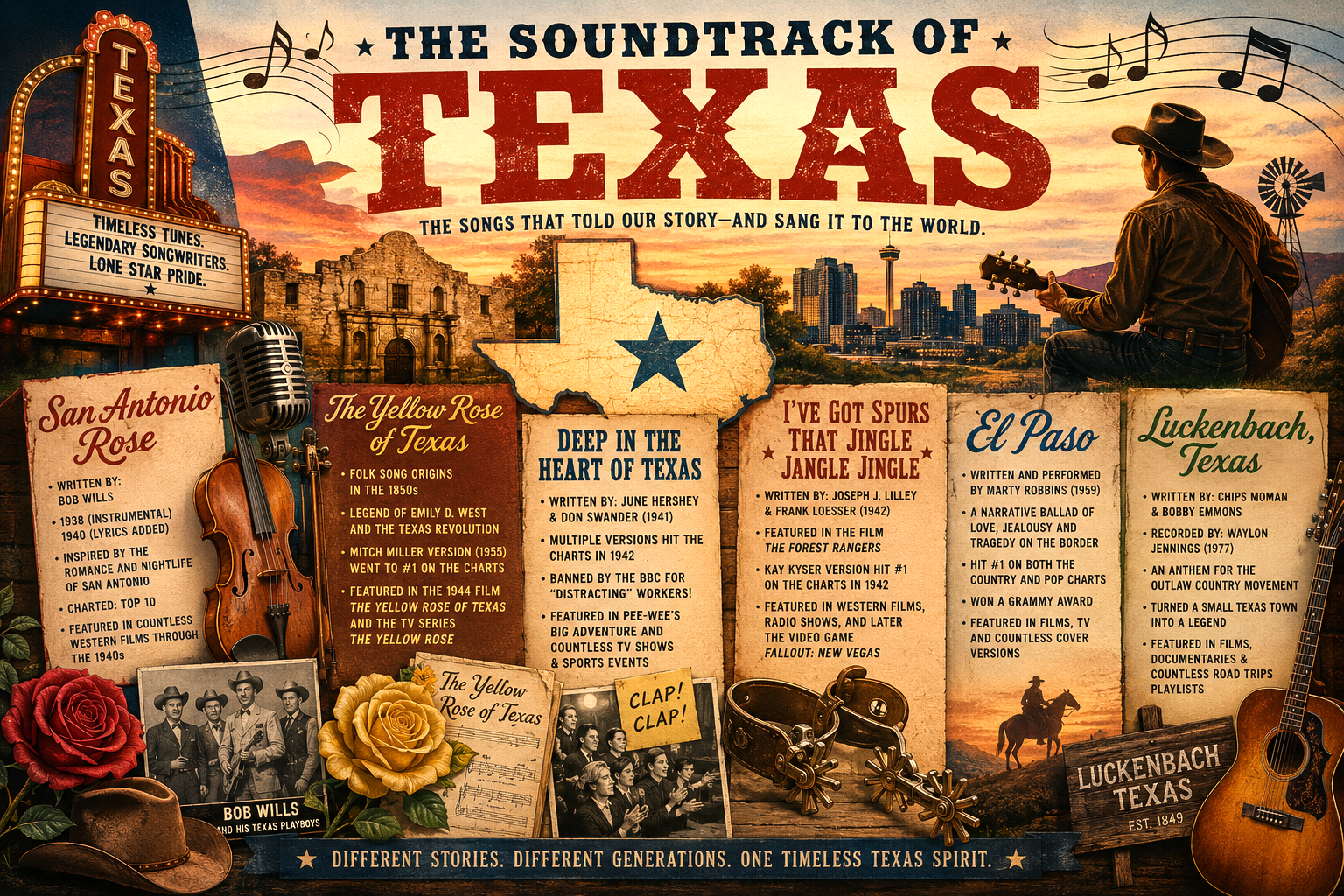
From Bob Wills’ Western Swing Masterpiece To The Clap-Along Magic Of “Deep In The Heart Of Texas,” These Iconic Tunes Transformed Lone Star Lore Into Chart-Topping American Mythology, Echoing Through Dance Halls, Hollywood Films, Television Screens, And Generations Of Texas Pride
By the time a song about Texas becomes a standard, it usually stops belonging to one singer. It becomes folklore. Campfire currency. Stadium soundtrack. Dancehall gospel. Somewhere between the first steel guitar note and the last two-step shuffle, these songs transformed into something larger than music: they became emotional state lines, as our Texana-seeking chronicler Lance Avery Morgan shares.
Texas has inspired an astonishing catalog of songs over the last century; some romantic, some rowdy, some deeply mythic. They have celebrated yellow roses, moonlit prairies, cattle trails, heartbreak, rodeos, and the peculiar swagger that comes with being from a state convinced it could secede emotionally at any moment.
From Bob Wills turning San Antonio into a Western swing fantasyland to wartime America clapping along to “Deep in the Heart of Texas,” these songs did more than entertain. They shaped how the world imagined Texas itself.
Here are the inside stories behind the most iconic Texas songs ever written, and how they galloped from jukeboxes to movie screens and into American mythology.
“San Antonio Rose” Is The Song That Helped Invent Western Swing
If Texas music has a crown jewel, it might very well be “San Antonio Rose.”
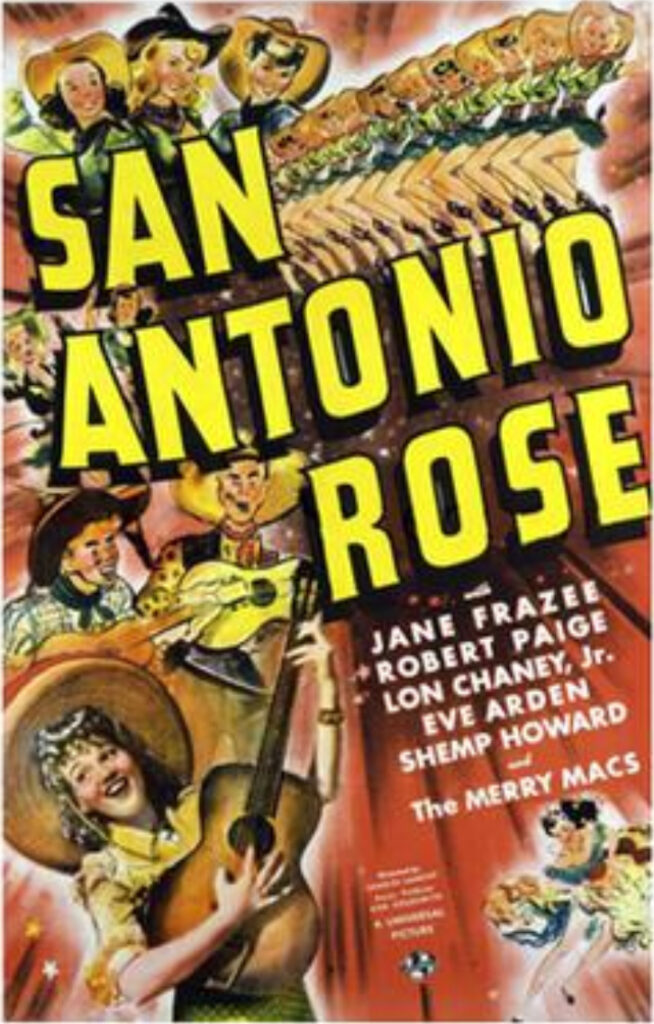
Written and first recorded by Bob Wills and His Texas Playboys in 1938, the original version was an instrumental inspired by the romance and nightlife of San Antonio during the height of the dancehall era. Wills reportedly loved the city’s atmosphere: the music, the dancing, the tequila-soaked evenings—and translated that feeling into a lush Western swing melody.
But the real magic happened in 1940, when Wills and band members added lyrics and re-recorded the tune as “New San Antonio Rose.” Suddenly, the song exploded nationally. The combination of big-band sophistication and cowboy rhythm became irresistible to wartime America.
The song helped define Western swing as a legitimate commercial genre and cemented Wills as the “King of Western Swing.” Decades later, the tune would be covered by everyone from Patsy Cline to Willie Nelson.
Hollywood loved it, too. “San Antonio Rose” appeared repeatedly in Western films throughout the 1940s and became shorthand for dusty romance and cowboy elegance. Even today, hearing the opening fiddle feels less like listening to a song and more like walking through swinging saloon doors.
And perhaps that’s the enduring genius of Bob Wills: he didn’t just write about Texas. He made Texas swing.
“The Yellow Rose of Texas”: A Folk Song Wrapped In Legend
Perhaps no Texas song carries more mystery than “The Yellow Rose of Texas.”
The tune dates back to at least the 1850s and began as a folk ballad that evolved through oral tradition before spreading nationally during the Civil War. The original lyrics were considerably different—and controversial by modern standards, yet the melody endured because it was astonishingly catchy and emotionally direct.
Over time, the song became associated with the legend of Emily D. West, a woman romantically mythologized as the “Yellow Rose,” linked to the Texas Revolution and the Battle of San Jacinto. Historians still debate how much of the story is fact versus folklore, but the mystery only deepened the song’s cultural power.
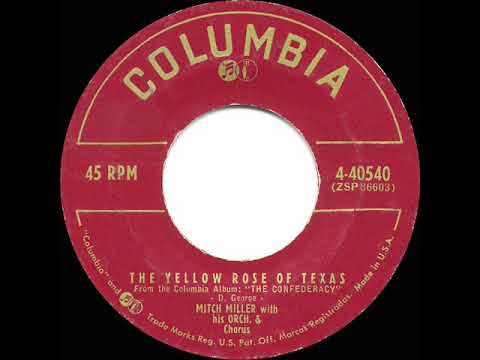
The definitive commercial breakthrough came in 1955 when Mitch Miller released his polished version with orchestra and chorus. It shot to No. 1 on the American charts and became one of the biggest songs in the country.
The song’s cinematic life has been equally impressive. It inspired the 1944 Roy Rogers “Western The Yellow Rose of Texas” film and later influenced the 1980s NBC television series “The Yellow Rose” starring Cybill Shepherd
More recently, the Mitch Miller version appeared in the television adaptation of Fallout, proving the song still has enough Lone Star mystique to survive generations of reinvention.
Texas has many unofficial anthems. This may be the most immortal.
“Deep In The Heart Of Texas”: The Clap Heard Round America
Some songs are so catchy that they become public-health concerns.
That was essentially the case with “Deep in the Heart of Texas.”
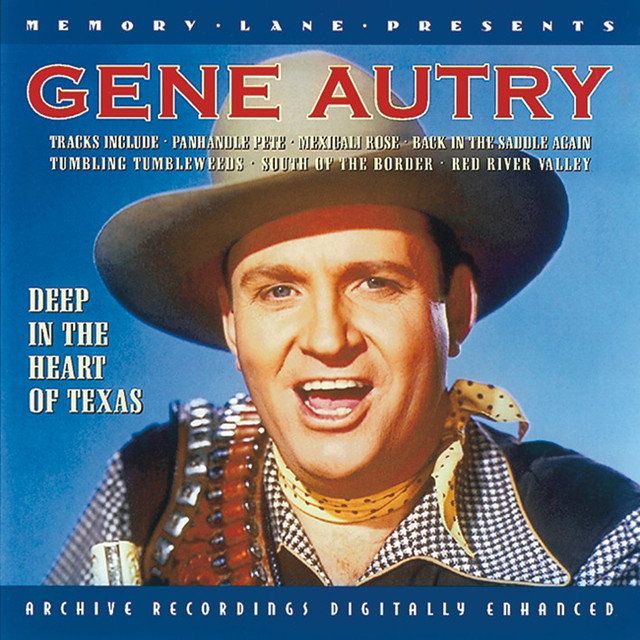
Written in 1941 by lyricist June Hershey and composer Don Swander, the tune arrived just as America entered World War II. It immediately became a phenomenon, with multiple versions simultaneously climbing the Billboard charts in 1942.
The song’s call-and-response clapping gimmick turned audiences into participants. Americans everywhere, from dance halls to military barracks, started clapping along instinctively.
The BBC reportedly even banned the song during working hours because factory workers were becoming too distracted by the rhythm and applause breaks.
Among the most successful recordings were versions by Perry Como with Ted Weems Orchestra and Bing Crosby. The song dominated “Your Hit Parade” for weeks and became one of the defining novelty-pop hits of the wartime era.
Hollywood quickly embraced it. The tune appeared in films throughout the 1940s and later turned up memorably in “Pee-Wee’s Big Adventure,” where Paul Reubens led strangers in a spontaneous roadside singalong.
Today, it remains omnipresent at Texas sporting events, especially at University of Texas games and Houston Astros matchups. Texans don’t merely hear “Deep in the Heart of Texas.” They perform it reflexively.
Usually with enthusiastic clapping.
“I’ve Got Spurs That Jingle Jangle Jingle”: The Cowboy Song That Refused To Die
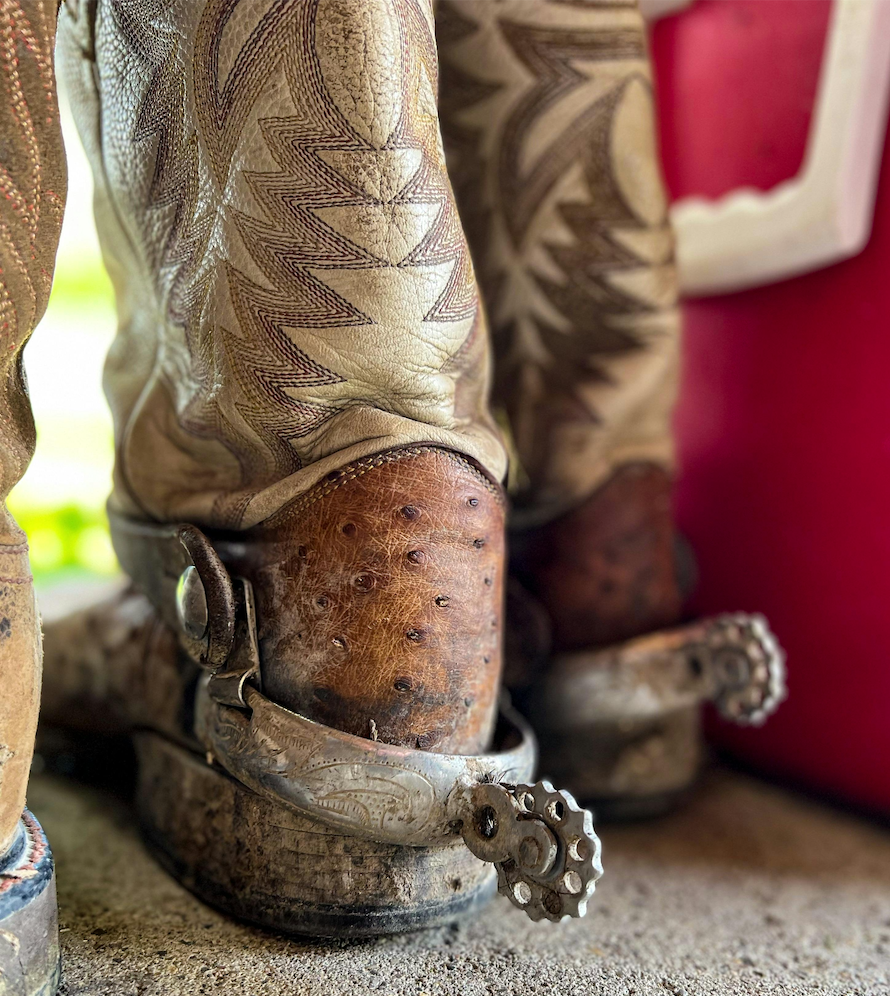
Long before it became beloved by retro-gaming culture and internet nostalgia, “I’ve Got Spurs That Jingle Jangle Jingle” was one of the biggest Western crossover hits in America.
Written in 1942 by Joseph J. Lilley and legendary lyricist Frank Loesser, the song was originally featured in the film The Forest Rangers.
The carefree cowboy tune perfectly matched wartime America’s appetite for escapist entertainment. Kay Kyser recorded the biggest-selling version, taking it to No. 1 on the Billboard charts in 1942.
Its lyrics painted the idealized Western drifter: independent, musical, charming, and permanently horseback-adjacent.
Hollywood could not get enough of it. The song became a staple in Western films and radio programs throughout the 1940s. Generations later, it experienced an unlikely cultural rebirth after being featured prominently in the video game Fallout: New Vegas, where younger audiences rediscovered the tune with near-religious enthusiasm.
Strangely, the song’s endurance says everything about Texas mythology itself. Cowboys may age. Spurs may rust. But Texas swagger is forever.
“El Paso”: The Border Ballad That Became A Cinematic Epic
No survey of Texas songs is complete without “El Paso.”
Released in 1959 by Marty Robbins, the song was practically a Western film disguised as a country single. Its sweeping narrative about love, jealousy, murder, and doomed escape near the Texas-Mexico border transformed country storytelling forever.
Despite running over four minutes, considered unusually long for radio at the time, the song became a No. 1 smash on both the country and pop charts and later won the Grammy for Best Country & Western Recording.
The tune’s vivid storytelling made it a favorite for film and television placements for decades. It also established Robbins as one of country music’s great narrative craftsmen and inspired countless later “story songs.”
More importantly, “El Paso” captured something central to Texas identity: romance mixed with danger, beauty mixed with loneliness, and geography that always feels slightly larger than life.
“Luckenbach, Texas”: The Anti-Nashville Anthem

When Waylon Jennings released “Luckenbach, Texas (Back to the Basics of Love)” in 1977, the tiny Hill Country town became permanently embedded in American culture.
Written by Chips Moman and Bobby Emmons, the song wasn’t originally written by a Texan, but Jennings transformed it into an outlaw-country manifesto. The tune rejected slick commercialism in favor of simpler living, easier love, and guitar-picking authenticity.
It became Jennings’ biggest crossover hit and helped define the outlaw-country movement alongside fellow Texans like Willie Nelson.
The irony? Luckenbach itself was practically unknown nationally before the song. Afterward, it became a pilgrimage site for country music fans, bikers, tourists, and dreamers looking for a slower Texas rhythm.
Sometimes songs don’t merely describe places.
Sometimes they create them.
Why Texas Keeps Inspiring Great Songs
Texas has always been uniquely musical because Texas itself operates like mythology.
It is geographically enormous, emotionally oversized, historically dramatic, and culturally hybridized. Mexican influence, Southern storytelling, frontier imagery, oil-boom ambition, German dancehall traditions, gospel roots, blues migration, and cowboy folklore all collided here.
The result was inevitable: Texas became one of the richest songwriting landscapes in America.
And unlike many regional songs that fade over time, Texas songs tend to be reborn in every generation. One decade, they appear in Roy Rogers Westerns. Next, they surface in prestige television, sports stadiums, or blockbuster video games. Go figure.
The melodies survive because the mythology survives.
After all, Texas has always understood something Nashville and Hollywood eventually learned: A good Texas song doesn’t just tell a story.
It tells the world who Texans believe they are.
Here Are 20 Facts About Lone Star State Songs That Turned Texas Into American Mythology
- Bob Wills didn’t just popularize Western swing… he practically invented its national identity with “San Antonio Rose”
- “San Antonio Rose” evolved from a sultry 1938 instrumental into the chart-smashing “New San Antonio Rose,” blending cowboy rhythm with big-band sophistication
- The opening fiddle of “San Antonio Rose” became Hollywood shorthand for cowboy romance, saloons, and Texas swagger throughout the 1940s
- “The Yellow Rose of Texas” dates back to the 1850s, making it one of the oldest and most mysterious songs in Texas folklore
- The legendary story of Emily D. West turned “The Yellow Rose of Texas” into a mythic blend of Texas Revolution history and romantic folklore
- Mitch Miller transformed “The Yellow Rose of Texas” into a No. 1 national hit in 1955
- The enduring popularity of “The Yellow Rose of Texas” stretches from Roy Rogers Westerns to modern television adaptations.
- “Deep in the Heart of Texas” became such a massive cultural obsession during World War II that the BBC reportedly discouraged factory workers from singing and clapping along
- The legendary clap sequence in “Deep in the Heart of Texas” turned ordinary listeners into active performers across America
- Bing Crosby and Perry Como helped make Texas music part of the national wartime soundtrack
- “Deep in the Heart of Texas” remains a reflexive singalong at Texas sporting events, from University of Texas games to Houston Astros matchups
- “I’ve Got Spurs That Jingle Jangle Jingle” perfectly captured the carefree cowboy fantasy America craved during World War II
- The cowboy classic found new life decades later, thanks to New Vegas and internet nostalgia culture
- Marty Robbins turned “El Paso” into a cinematic country masterpiece filled with love, jealousy, violence, and borderland drama
- “El Paso” broke radio conventions with its unusually long runtime and still became a No. 1 crossover phenomenon
- Waylon Jennings transformed “Luckenbach, Texas” into the ultimate outlaw-country anthem, rejecting Nashville polish and commercialism
- Before the song’s release, Luckenbach was virtually unknown outside Texas… afterward, it became a legendary pilgrimage destination
- Texas songs endure because they combine cowboy mythology, frontier storytelling, heartbreak, rebellion, and oversized Lone Star pride into unforgettable music
- These songs survived by constantly reinventing themselves through films, television, sports culture, radio, and video games across generations
- The greatest Texas songs do more than entertain… they define how Texans see themselves and how the rest of America imagines Texas itself