
 Lance Avery Morgan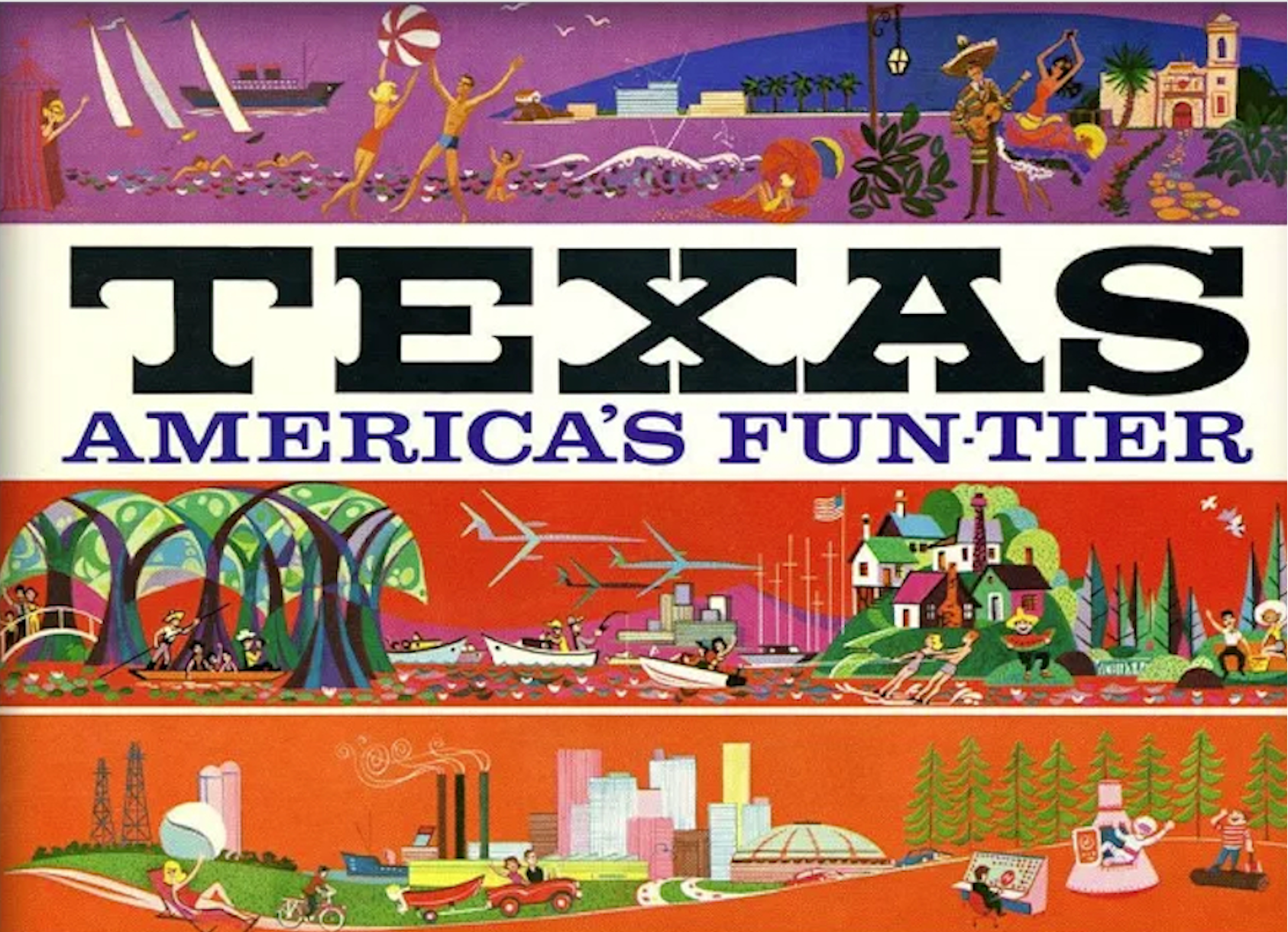
Big Sky, Bigger Dreams: Take A Look At Texas Through The Lens Of Vintage Graphic Art
Photography courtesy of eBay and archival
Long before Instagram, stylized sunsets and streamlined trains convinced the world that everything really was bigger (and better) in Texas. That included cowboys, coastline, and cosmic ambition. Here’s a look at how graphic design turned Texas into a destination fantasy, just in time for summer, according to our Texas vintage arbiter, Lance Avery Morgan.
Big, Bold & Dynamic
Before hashtags. Before influencers. Before “Visit Texas” became a marketing machine.
There was ink. There was paper.
And there was a bold, graphic dream of Texas. The posters that sold sunshine, swagger, and the wide-open road.
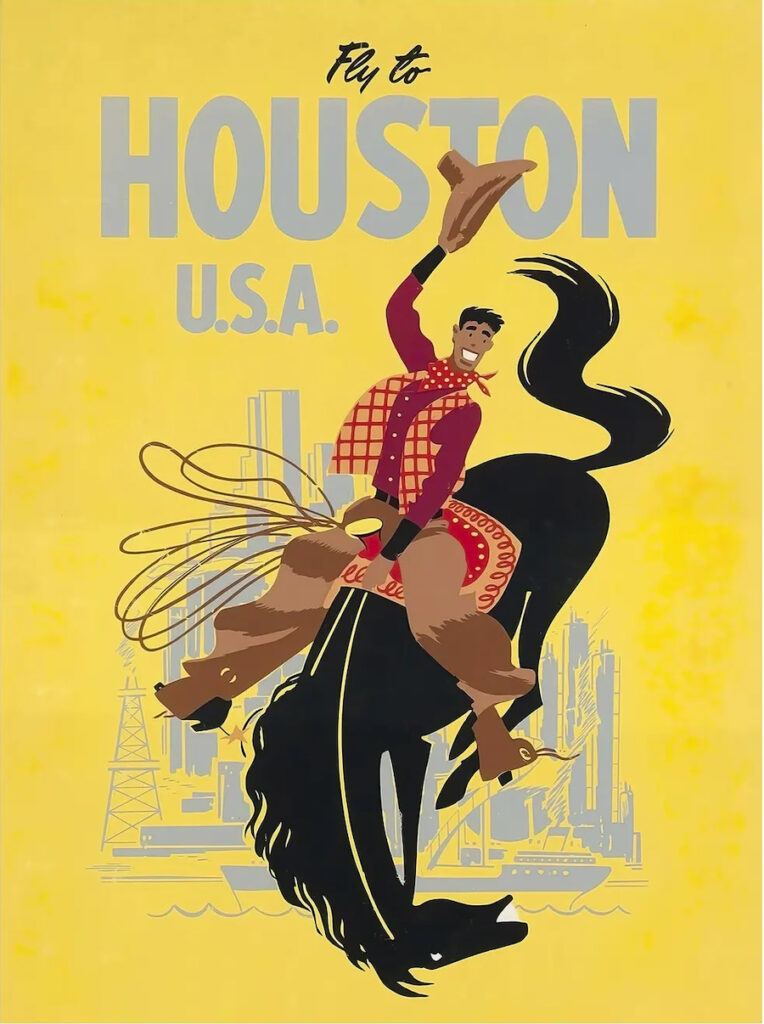
From the 1940s through the 1970s, travel posters transformed the Lone Star State into a Technicolor fantasy of sun-drenched beaches, heroic cowboys, sleek trains, blooming bluebonnets, oil derricks at golden hour, and, by the late ’60s, rockets poised for the moon.
But were these posters just pretty art? Or did they actually work?
Let’s saddle up, shall we, to see how the Texas dream was illustrated?
The Postwar Boom: Selling The Open Road
After World War II, America was ready to move. Families bought cars in record numbers. Highways expanded. Air travel emerged as glamorous. The romance of mobility was real.
And Texas? Texas was perfectly positioned.
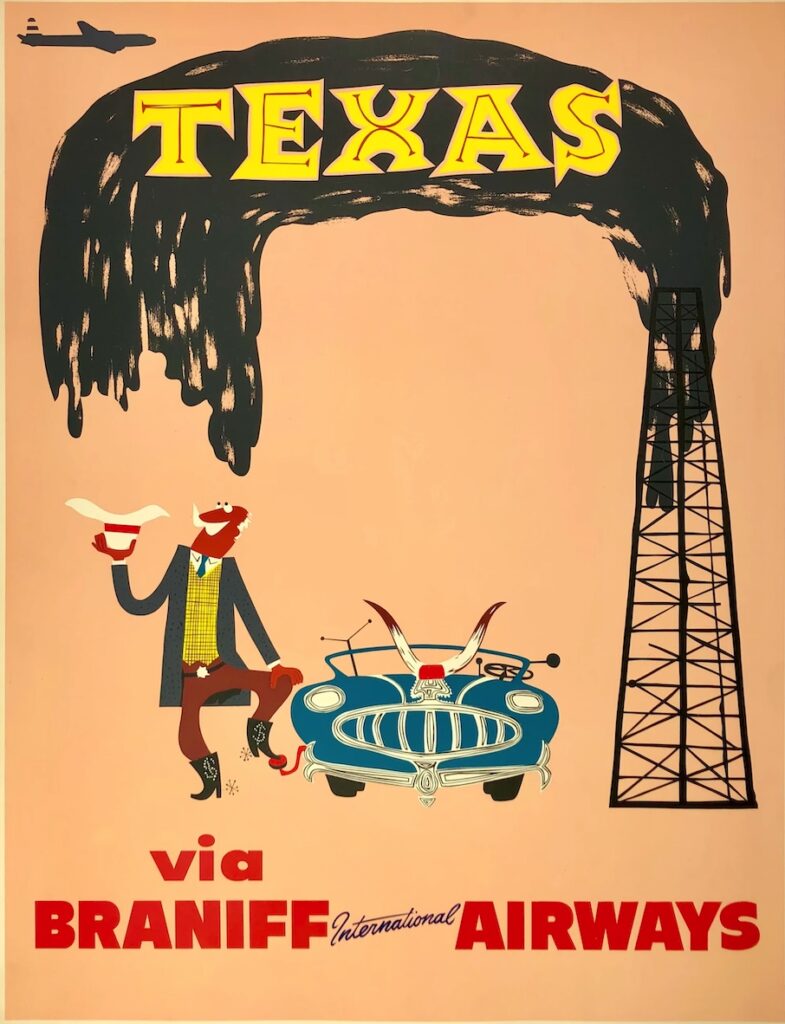
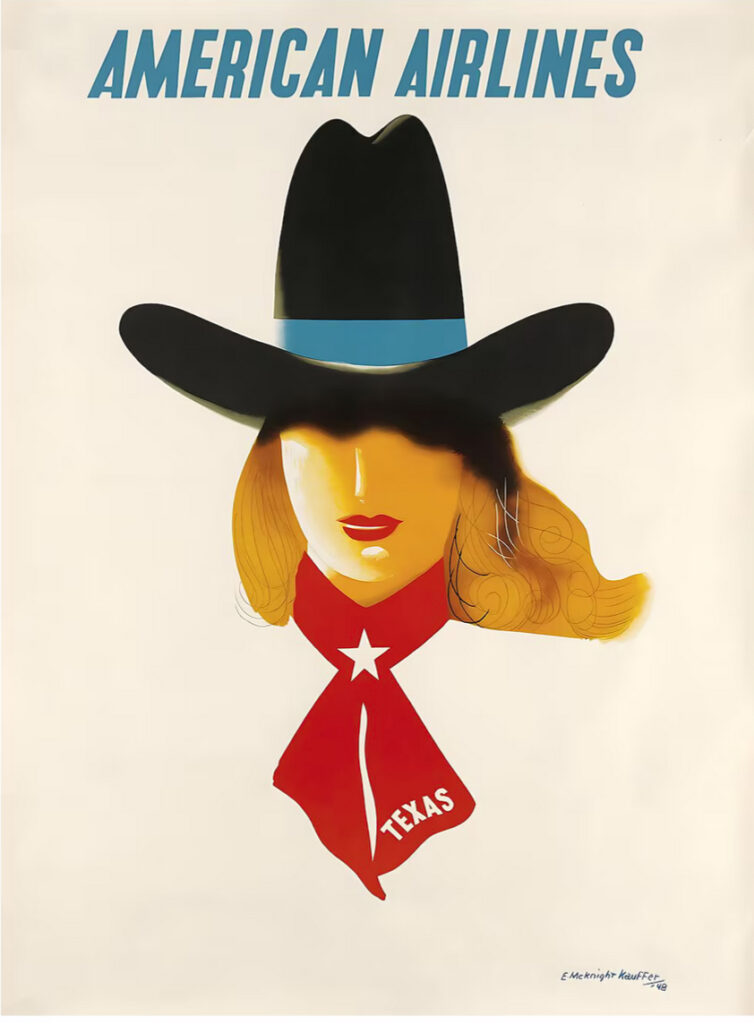
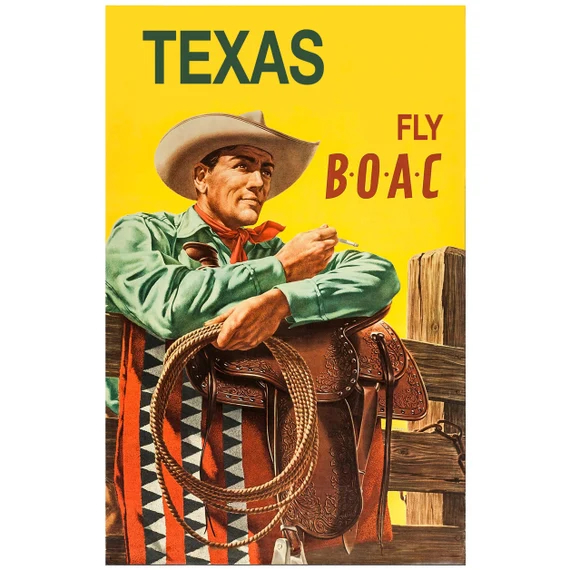
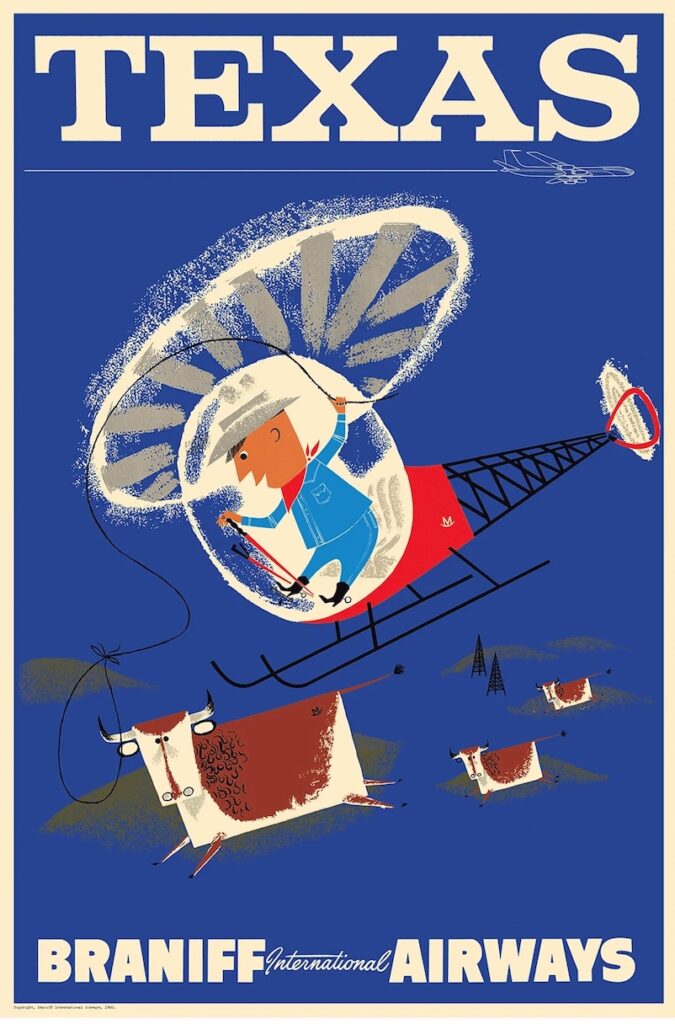
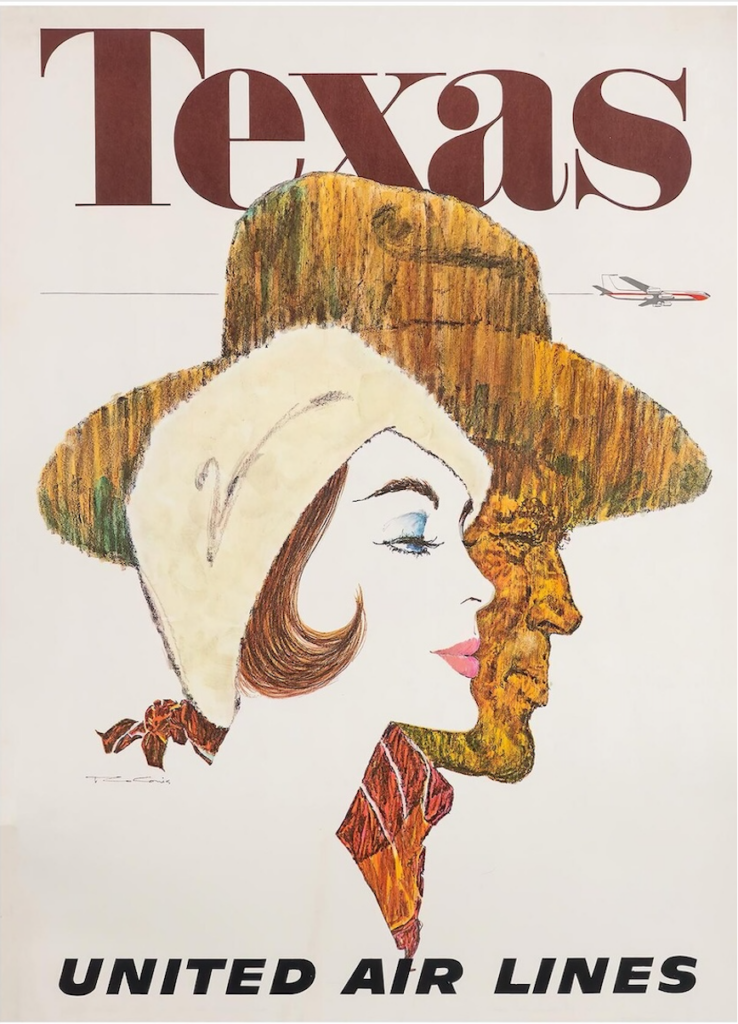
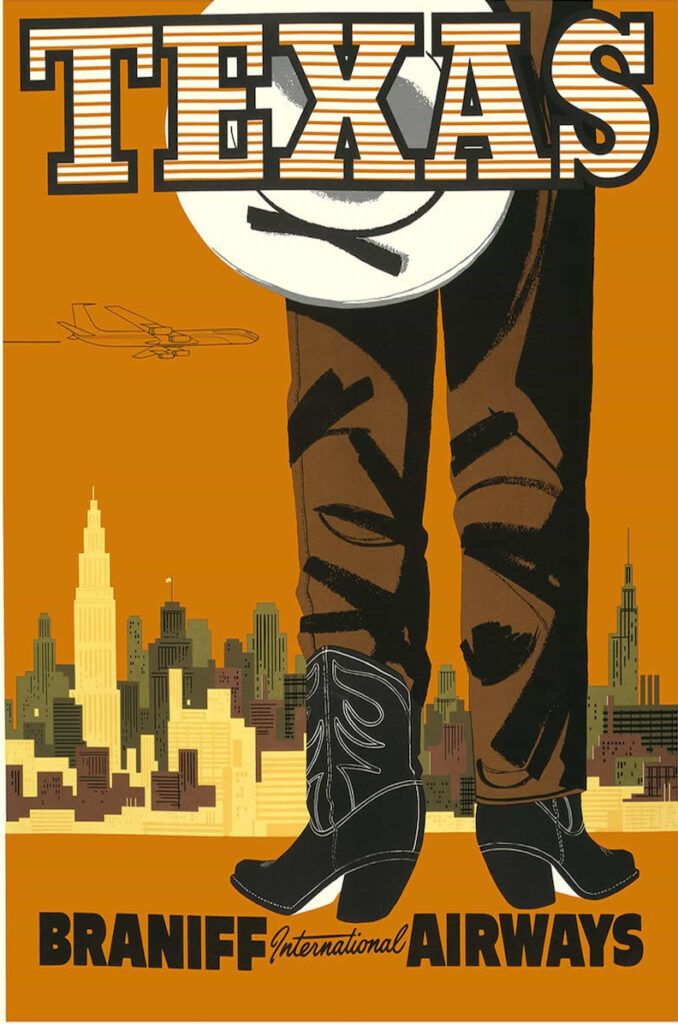
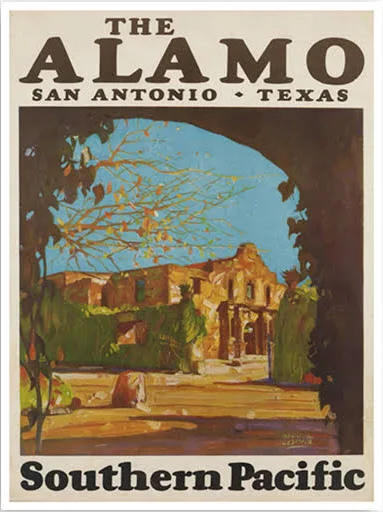
Railroad companies like the Missouri Pacific and Southern Pacific Railroads, and airlines such as Braniff International Airways commissioned vibrant posters to entice travelers south and west. These weren’t documentary photographs. They were stylized promises. They represented endless highways, sparkling Gulf Coast waters, ranches framed by heroic skies, and even San Antonio’s Spanish missions bathed in sunset gold
The message was clear: Texas wasn’t just a place. It was pure possibility waiting to be wrangled by newcomers.
And yes, they absolutely attracted visitors. Mid-century tourism data shows dramatic increases in domestic leisure travel across the Southwest during this era. Texas cities leaned into promotional campaigns that paired infrastructure growth with visual branding. Posters were the billboards of their day. placed in train stations, travel agencies, department stores, and airports across the country.
If you were shivering in Chicago in January, a poster of Galveston’s coastline or a dude ranch in West Texas looked like salvation.
The Graphic Style: Colorful, Optimistic & Unapologetically Dramatic
The design language evolved across three decades:
1940s: WPA Influence & Heroic Realism
Many early posters carried the legacy of New Deal-era aesthetics: clean composition, strong lines, patriotic color palettes. Skies were vast. Figures were noble. Texas appeared rugged and grounded.
1950s: Atomic Optimism
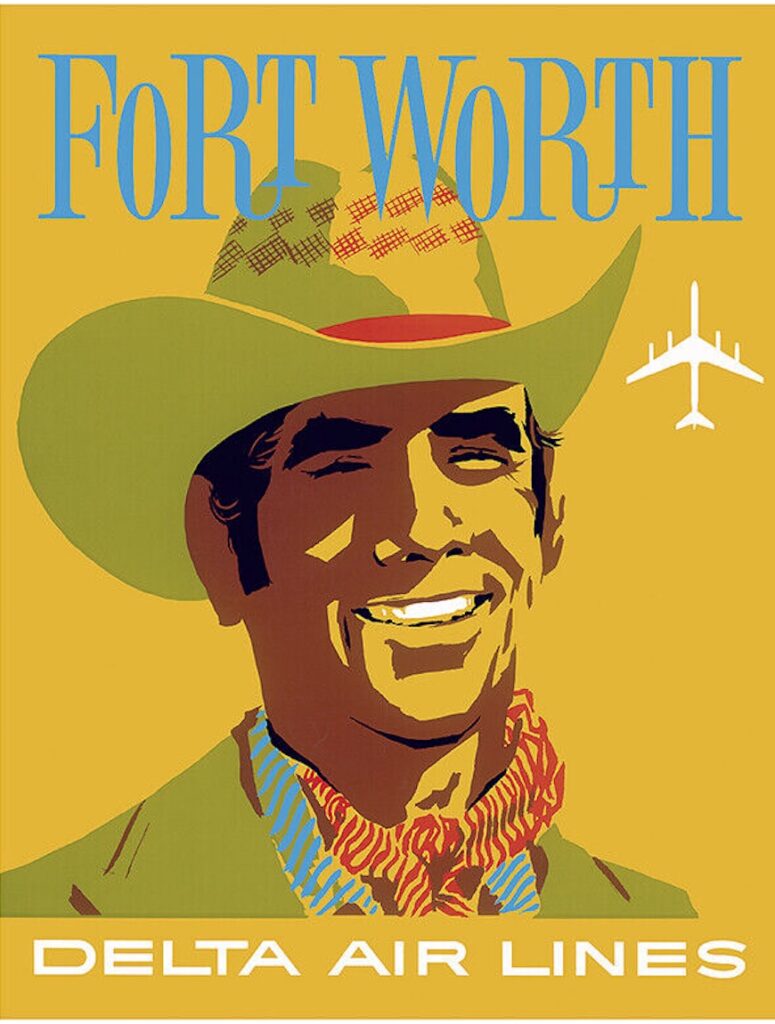
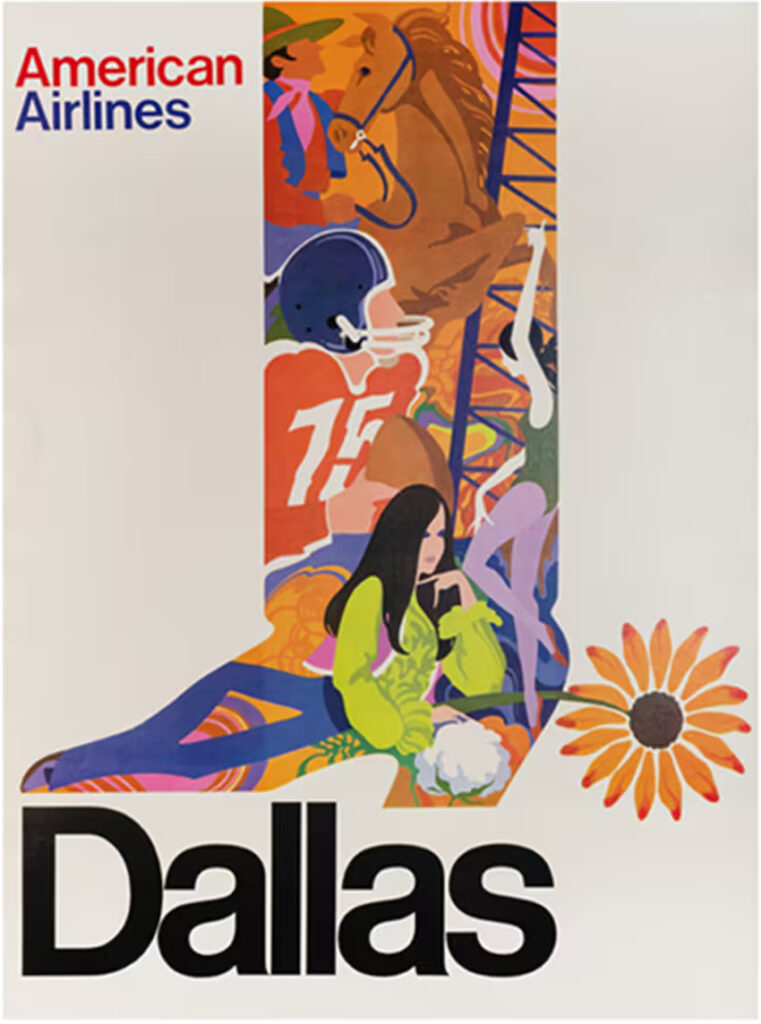
Mid-century modern took over. Think geometric shapes, saturated color blocks, simplified figures, and dramatic shadows. Typography became sleek. Cowboys stood beside streamlined trains. Oil fields shimmered like futuristic forests.
This was Texas as prosperity.
1960s–1970s: Space Age & Psychedelic Edge
With NASA’s growing presence in Houston, rockets joined cattle as symbols of Texan identity. The state was no longer just a frontier… heck, it was the future.
Designs incorporated bolder typography, abstract backgrounds, and occasionally groovier palettes. Texas was no longer only rural romance; it was modern momentum.
What They Chose To Show (And What They Didn’t)
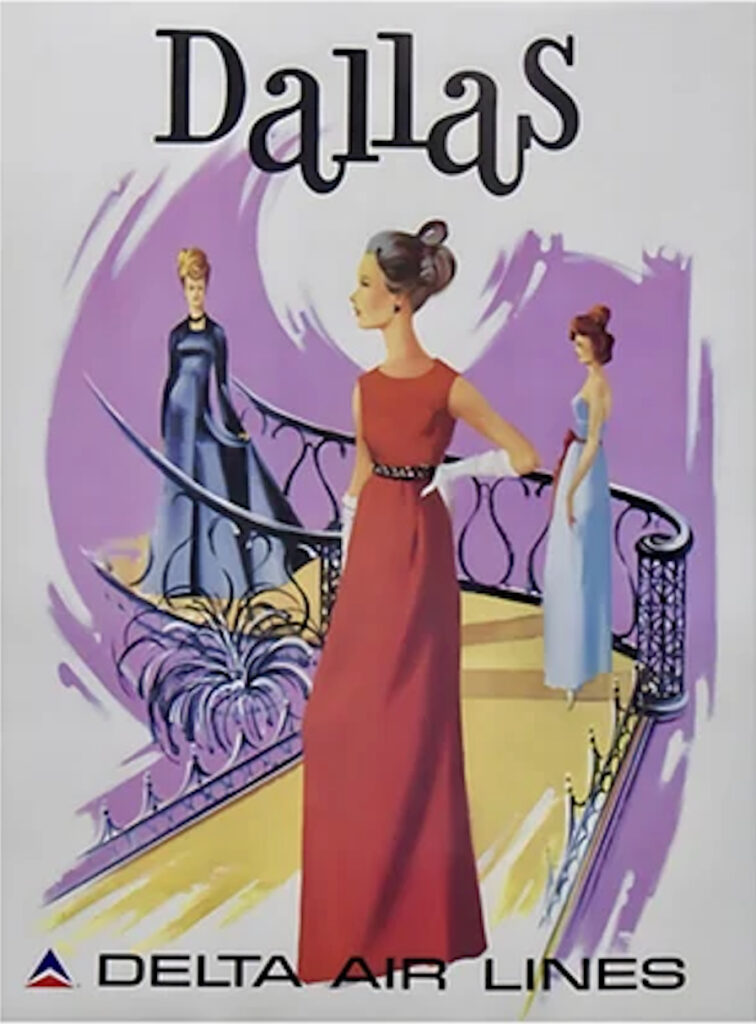
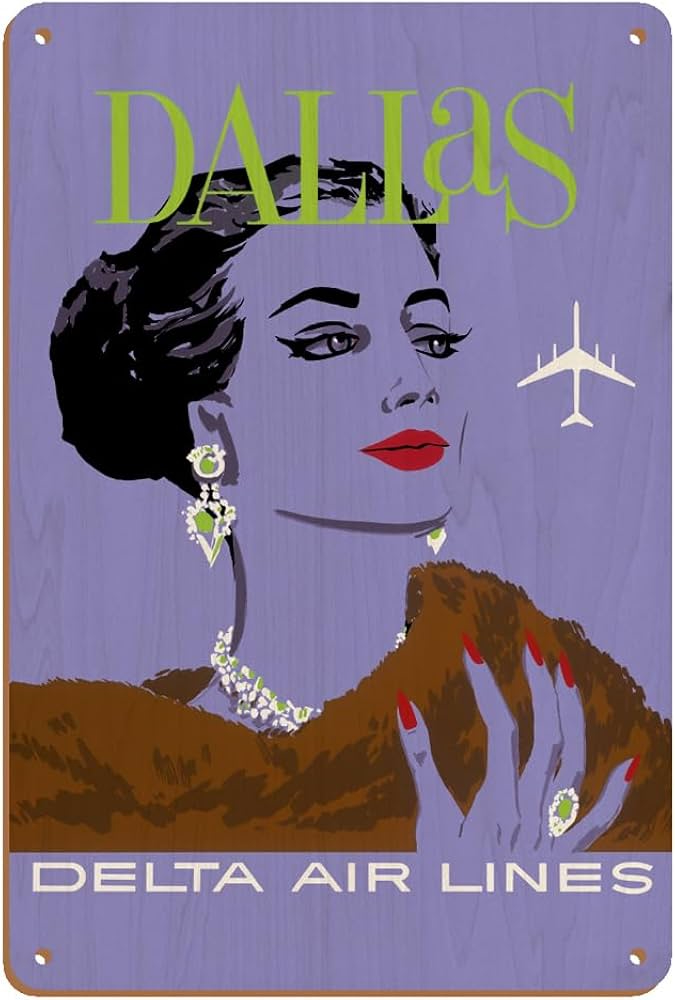
Vintage travel posters presented a carefully curated Texas: bluebonnet fields, the Alamo, sunlit missions in San Antonio, ranch culture, oil prosperity, Gulf Coast leisure, glamorous shopping (we see you, Dallas), and later, space exploration.
Absent were the complexities: economic disparities, segregation, and environmental strain. These posters were aspirational storytelling.
And that was the point.
They weren’t documentaries. They were invitations.
Did They Really Work?
In short: yes. Posters were part of a larger promotional ecosystem—rail campaigns, airline marketing, roadside tourism bureaus, and printed guidebooks. But they provided the emotional hook.
Psychologically, stylized imagery works because it simplifies and idealizes. A bold poster can distill a state lassoed into a single compelling idea: freedom, sunshine, adventure, opportunity
When Americans were choosing where to vacation, or even relocate, Texas looked like both escape and ambition.
By the 1960s, tourism and migration into Texas accelerated significantly, especially to Houston, Dallas, San Antonio, and Austin. While posters weren’t solely responsible, they were part of the branding engine that made Texas feel magnetic.
Why They’re Still Beloved Today
There’s a reason vintage Texas travel posters fetch impressive prices at auctions and decorate everything from Hill Country ranch homes to modern Austin lofts.
They represent many things.
Design integrity: before digital manipulation, artists relied on composition, color theory, and hand-rendered typography. The craftsmanship shows.
Nostalgia without cynicism. These posters capture an era when optimism felt uncomplicated. They radiate confidence.
Regional pride. Texans love Texas. Vintage posters reinforce a timeless identity…independent, expansive, and aspirational.
The power of style. Their bold palettes and graphic clarity complement contemporary interiors beautifully. A 1950s Gulf Coast poster over a sleek sofa? Perfection.
Perhaps most importantly, cultural storytelling. They document how Texas wanted to be seen. That makes them historical artifacts as much as art objects.
The Collectability Factor
Original mid-century travel posters, especially those produced by airlines, railroads, or official tourism bureaus, can command significant prices depending on rarity and condition.
Collectors tend to seek vibrant original color, minimal restoration, iconic subject matter (The Alamo, Space Center, Galveston beaches), and those created by recognized graphic designers
Reproductions are widely available, but originals carry the tactile charm of thick stock paper, slight patina, and authentic mid-century ink.
They’re not just décor. They’re time capsules.
Texas: Myth, Marketing, Masterpiece
Vintage travel posters didn’t invent Texas mythology. But they amplified it.
They framed Texas as vast and glamorous. Rural yet modern. Historic yet futuristic. They told Americans, and the world, that the Lone Star State was where horizons widened, and fortunes were made.
And decades later, those horizons still glow in saturated sunset hues.
Wish you were here? People did. And many came.
10 Of Our Favorite Reasons Vintage Texas Travel Posters Still Captivate Collectors
- They helped fuel Texas tourism growth in the postwar boom.
- Railroads and airlines used them as primary marketing tools.
- Their WPA-inspired 1940s style emphasized heroic landscapes.
- 1950s designs embraced bold mid-century modern aesthetics.
- Space Age imagery reflected Texas’ role in the American future.
- They created aspirational narratives rather than literal depictions.
- Original prints are highly collectible and increasingly rare.
- Their graphic simplicity makes them timeless décor pieces.
- They reflect how Texas branded itself to the nation.
- They preserve a uniquely optimistic chapter in American design history.