 Lance Avery Morgan
Before prestige television and cinematic universes, before coonskin caps became retro punchlines, there was a towering Texan who quietly, and then thunderously, became the embodiment of the American frontier. Fess Parker didn’t just play heroes. For millions, he defined them
By Lance Avery Morgan Photography courtesy of Archival, Gemini
Fess Parker carried himself with that unmistakable Lone Star composure: measured, polite, as steady as a West Texas horizon at sunrise. Born in Fort Worth in 1924, raised in San Angelo, and standing upright at six-foot-six, he was a tall drink of water. He had a resonant baritone and a presence that required no embellishment; he brought gravity to every frame he occupied as an actor.
From Navy To Footlights
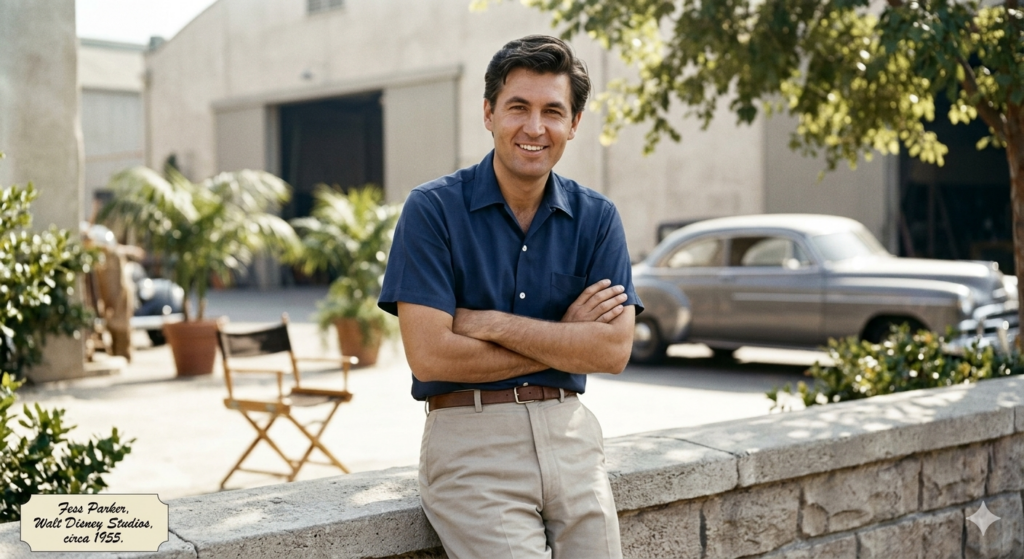
Before Hollywood ever fitted him for buckskins, Parker served in the U.S. Navy during World War II. After the war, he enrolled at the University of Texas at Austin, studying business before shifting decisively toward drama. He later continued his theatrical training at the University of Southern California, sharpening a stage technique that would anchor his screen performances.
His early career in Hollywood was a study in steely persistence. Like many young actors in the early 1950s, Parker paid his dues in bit parts, regional theater, and uncredited film roles. He appeared briefly in Harvey, sharing the screen (albeit fleetingly) with James Stewart. In Them!, the classic atomic-age thriller, Parker’s performance was largely left on the cutting-room floor, an early Hollywood heartbreak that might have stalled a lesser personality.
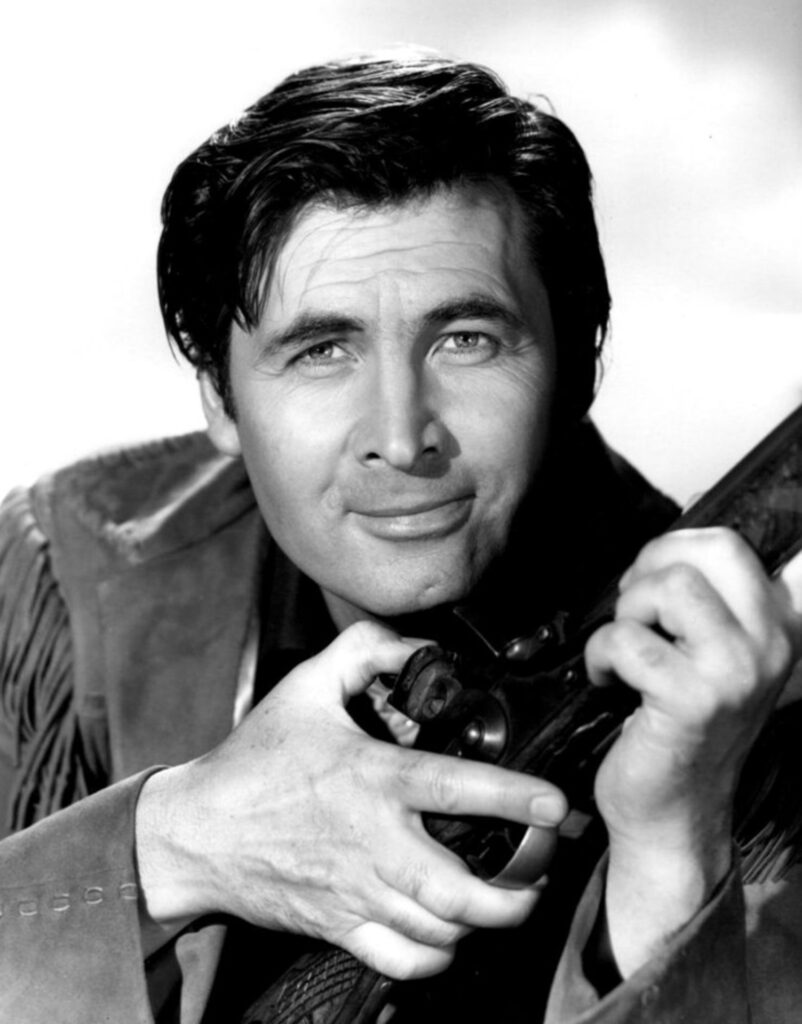
But Parker possessed something directors noticed immediately: scale. He was physically imposing, yes, but he also had a calm that translated onscreen. Casting agents began calling. He guest-starred in a bevy of popular Western TV shows, as well as doing episodic turns in stalwart series like Playhouse 90, Dragnet, and Schlitz Playhouse, and all of them were perfect training. Small Western roles followed. He appeared in pictures such as Springfield Rifle and Island in the Sky, steadily building a résumé rooted in frontier storytelling.
Those early Westerns were more than genre exercises; they were training grounds. Parker learned how to sit on a horse properly for the camera, how to hold silence in wide shots, and how to let stillness convey moral weight. In hindsight, Hollywood had already begun grooming its future frontiersman.
Walt’s Tall Order
When Walt Disney was casting for his ambitious frontier television project in 1954, he wasn’t simply looking for an actor in a coonskin cap. He was searching for a definitive symbol.
Disney later remarked of Parker, “He had the kind of honesty in his face you couldn’t manufacture. When he stood there, you believed him.” It was that authenticity that secured Parker the role of Davy Crockett in Davy Crockett and ignited a national phenomenon.
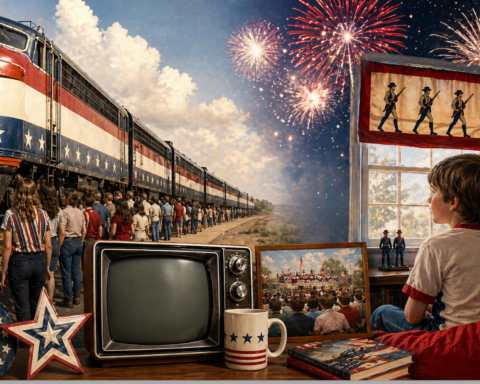
The “Crockett Craze” was seismic. Children sang the theme song in schoolyards. Merchandising exploded. American frontier mythology was reborn on television screens across the country as the Baby Boomers donned their coonskin caps. But Parker never winked at the camera. His Crockett was dignified, brave without bravado.
Television historian Robert Thompson later observed, “Fess Parker wasn’t playing a caricature of the frontier. He was playing the American ideal. That’s why audiences responded the way they did.”
Film Career Between The Legends
While television made him a household name, Parker’s film career developed in parallel, and with surprising range.
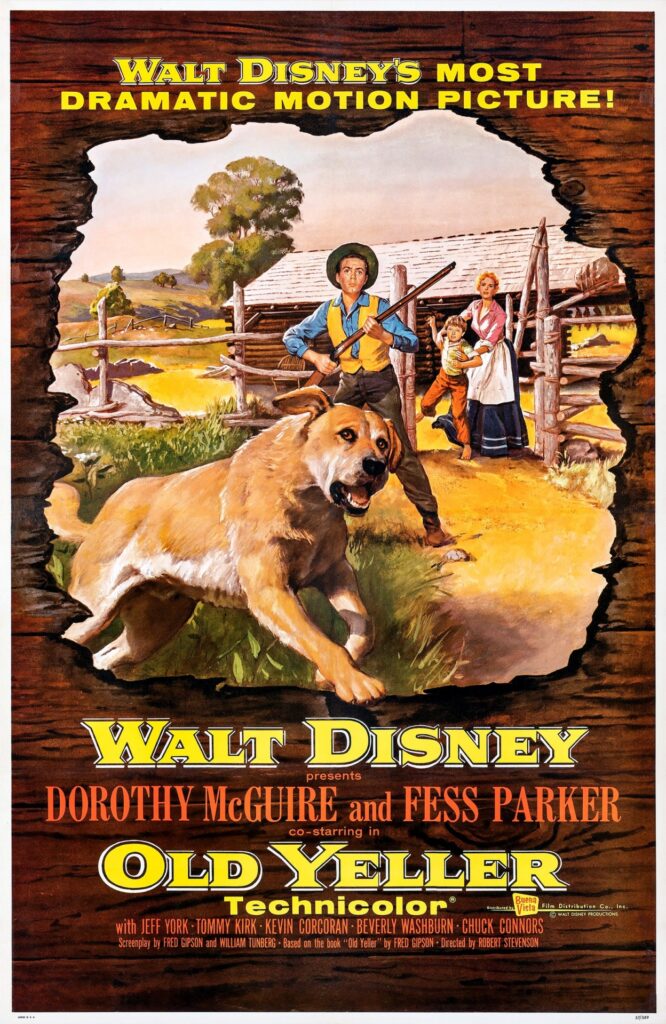
Following the success of Crockett, Disney cast him in several successful feature films, including The Great Locomotive Chase and Westward Ho the Wagons!, both reinforcing his image as an unfaltering American lead. He also starred in Old Yeller, appearing in a supporting role in one of Disney’s most beloved family dramas.
Beyond Disney, Parker sought to expand his repertoire even more. He appeared opposite John Wayne in The Undefeated, holding his own alongside the Duke in a post–Civil War Western that underscored Parker’s enduring screen authority. The pairing of two towering figures, both physically and culturally, was a Western fan’s dream.
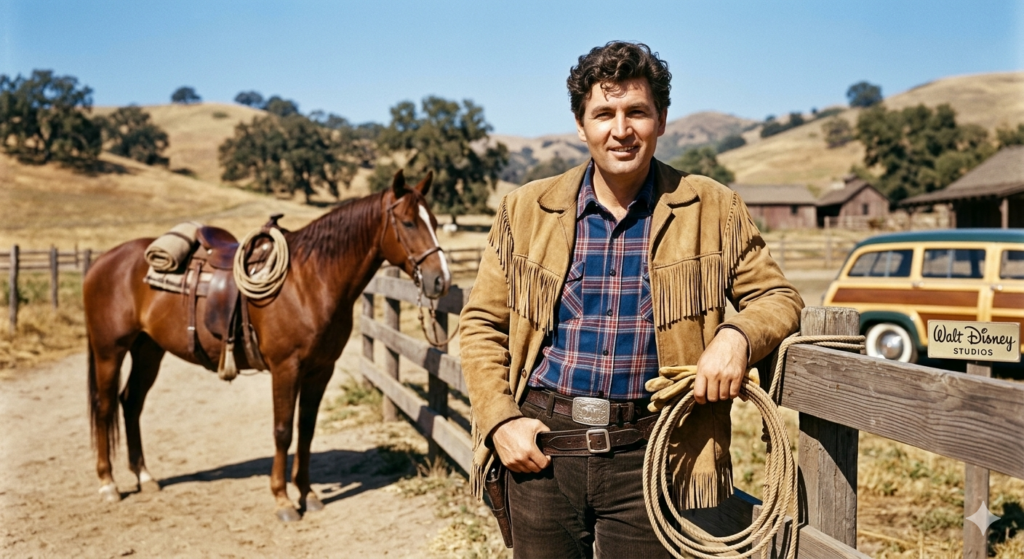
Critics often noted that Parker brought a thoughtful restraint to film roles that might otherwise have veered into stereotype. Film scholar Leonard Maltin observed, “There was a reassuring quality to Fess Parker. He projected strength, but also decency. That combination is rarer than we realize.”
The Business Of Being Boone
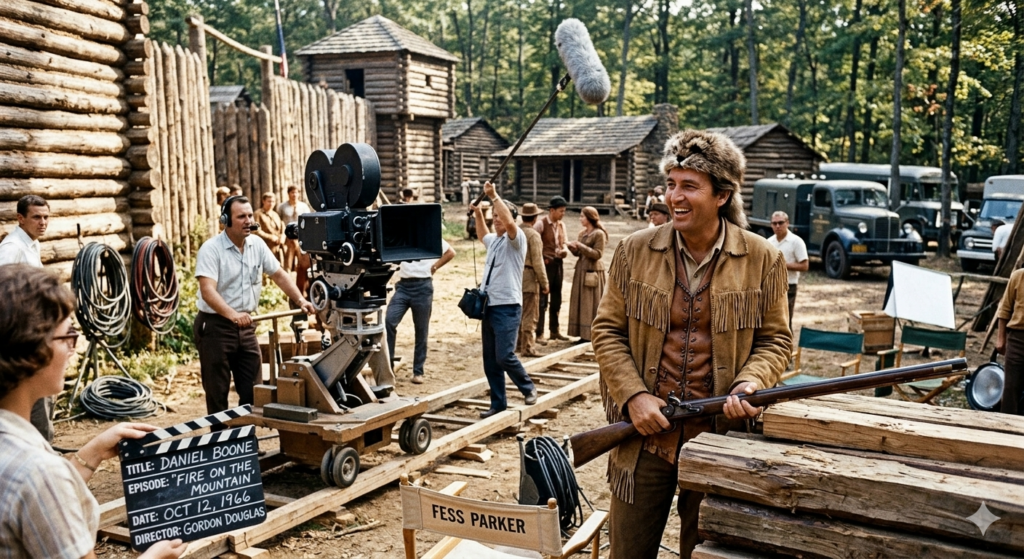
If Crockett made him famous, Daniel Boone made him endure. A decade later, in 1964, Parker returned to buckskins in Daniel Boone, a series that ran for six seasons and solidified his place in American pop culture.
But Parker had learned from Crockett’s merchandising whirlwind. This time, he stepped into a producer role, securing creative and financial participation. It was a savvy move that revealed a mind as sharp as any frontiersman’s blade.
Actor and co-star Darby Hinton once said of Parker, “Fess was the calm in every storm. On set, he was the leader. Off the set, he was the leading example. He treated everyone, from the studio head to the newest crew member, with the same respect.”
A Presence That Traveled Beyond Hollywood
Parker’s appeal extended well beyond studio lots. Former President Ronald Reagan, himself an actor before entering politics, once reflected on the power of television heroes in the 1950s, noting that performers like Parker “reminded audiences of values that felt steady and dependable in rapidly changing times.”
That steadiness became Parker’s hallmark. He represented a version of American masculinity that felt protective rather than performative.
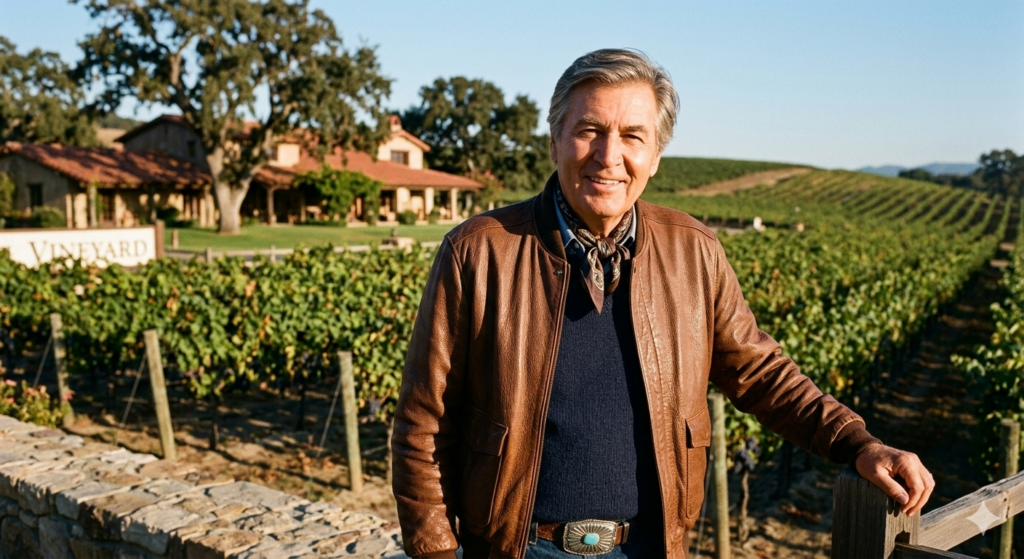
Even in the wine industry, where Parker would later build a respected and successful second career, his reputation preceded him. A Santa Ynez Valley vintner once remarked, “Fess didn’t trade on fame. He built his winery the way he built his career: patiently, thoughtfully, with long-term vision.”
His venture, Fess Parker Winery & Vineyard, became one of California’s respected estates, while Fess Parker’s Santa Barbara Hotel reflected the same understated elegance that defined him onscreen.
The Quiet Authority
Perhaps the most meaningful tribute came from those who worked closest to him. Producer Aaron Rosenberg once described Parker as “a man who understood that playing a hero meant behaving like one.” And that, ultimately, may be the essence of his legacy.
He never leaned into parody. Never chased reinvention for reinvention’s sake. He stood tall, literally and figuratively, and allowed audiences to find comfort in his consistency. When Parker passed away in 2010, tributes poured in from across entertainment, business, and civic life. Many used the same words: integrity, steadiness, and class.
In later years, he was a recipient of the Texas Medal of Arts in 2003, which solidified his stature as a true Texan. Today, for Curated Texan readers, his story resonates not simply as nostalgia but as a reminder. Some stars flicker. Some explode. And some, like Fess Parker, rise slowly, burn steadily, and illuminate an era.
He brought Texas to Hollywood like no other. And somehow, in buckskins and beyond, he made the whole country feel just a little taller.
10 Reasons Fess Parker Will Always Be Texas’ Tallest Hollywood Legend
Big in stature. Bigger in legacy. From the plains of Texas to the bright lights of Hollywood—and eventually the vineyards of California, Fess Parker built a career (and life) rooted in integrity, ambition, and unmistakable presence. Here’s why his story still stands tall.
1. He Was Pure Texas Stock
Born in Fort Worth and raised in San Angelo, Parker embodied Lone Star values long before Hollywood discovered him. His calm authority and grounded demeanor were shaped under Texas skies.
2. He Served His Country Before He Served the Camera
Before acting, Parker was a U.S. Navy veteran of World War II. That real-world discipline later translated into the steady leadership he projected onscreen.
3. He Paid His Dues the Hard Way
Like many actors of his era, Parker’s early career was filled with small roles and near-misses. He appeared briefly in Harvey alongside James Stewart* and saw much of his performance cut from the sci-fi classic Them!. Instead of quitting, he doubled down.
4. Walt Disney Saw What Others Didn’t
When casting Davy Crockett, Walt Disney recognized Parker’s innate honesty and commanding presence. The result? A cultural phenomenon that launched a nationwide coonskin cap craze and made Parker a household name.
5. He Turned Frontier Fame Into Television Gold
A decade later, Parker returned to buckskins in Daniel Boone. The show ran for six seasons, cementing his status as America’s quintessential frontiersman.
6. He Was a Savvy Businessman—Not Just a Star
After missing out on merchandising profits from Crockett, Parker secured ownership of Daniel Boone by serving as a producer. In today’s terms? He understood intellectual property before it was trendy.
7. He Held His Own with Hollywood Heavyweights
Parker’s film career extended beyond family fare. He appeared in Old Yeller and later starred opposite John Wayne in The Undefeated, proving he could command the big screen as confidently as television.
8. He Redefined the American Hero
Critics and historians alike noted Parker’s unique screen presence: strength without arrogance, leadership without bluster. His characters embodied decency—something audiences instinctively trusted.
9. He Reinvented Himself as a Wine Country Visionary
After stepping away from acting, Parker built a respected hospitality empire, including Fess Parker Winery & Vineyard and the Fess Parker’s DoubleTree Resort. His second act was as strategic as his first.
10. He Left a Legacy Bigger Than Buckskins
When Parker passed away in 2010, tributes described him with the same words: integrity, steadiness, and class. He didn’t chase reinvention. He stood tall and let character carry him.
Why Fess Parker Still Matters
Fess Parker wasn’t just a television star. He was a cultural touchstone—an actor who helped define American frontier mythology for a generation, a businessman who learned from experience, and a Texan who carried his roots wherever he went.
Some legends flicker. Some boom. And some, like Fess Parker, stand tall forever.