 Lance Avery Morgan
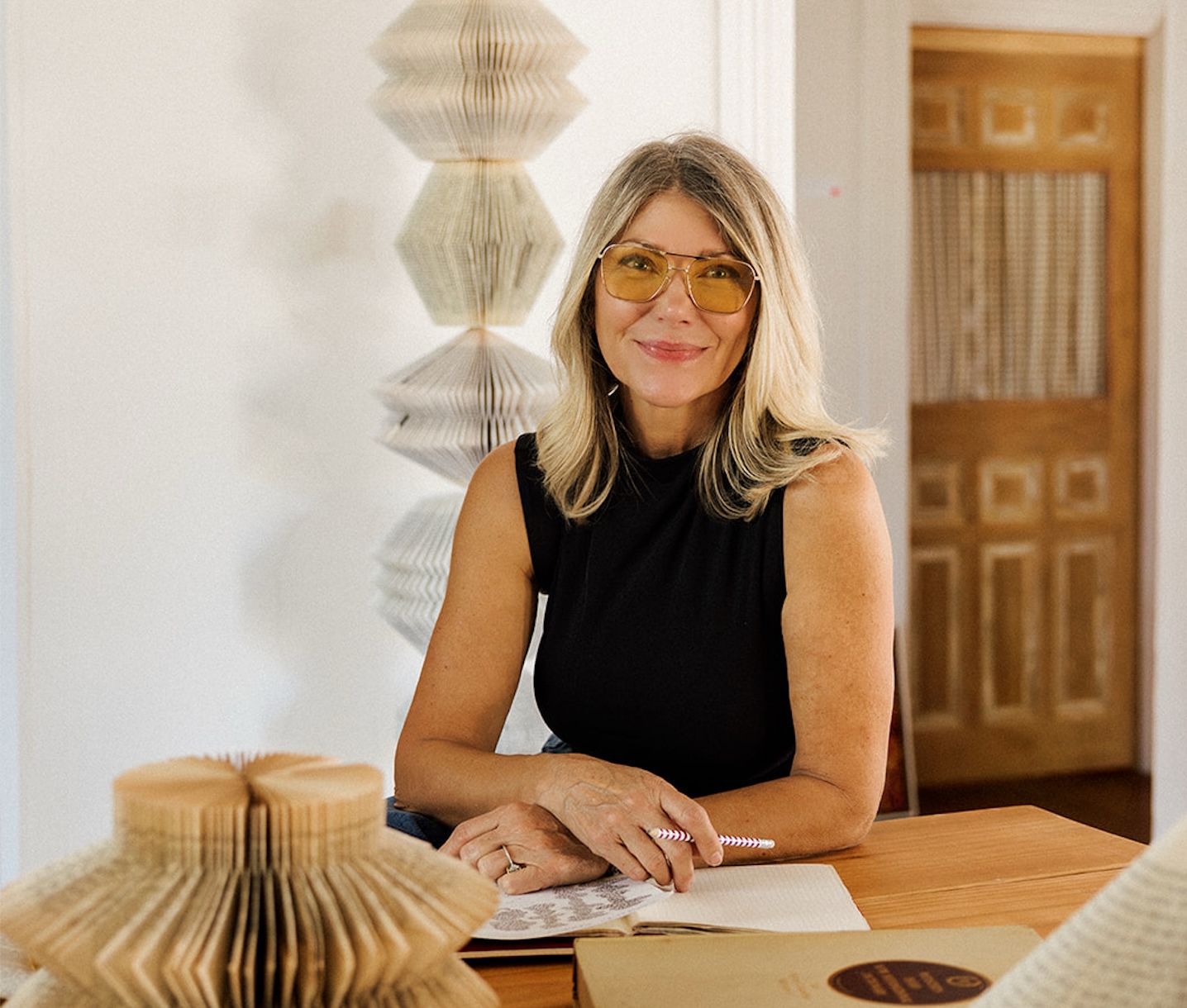
In The Hands Of The Dynamic Austin Artist, Discarded Books, Paper Ephemera And Memories Become Sculptural Objects That Ask Us To Reconsider What A Book, And A Story, Can Become
Photography by Chase Damiel, Haley Everett Photography and Michelle Nash Photography
Some artists paint on canvas, some carve stone, and some assemble found objects. And then there is Austin’s Karen Hawkins, who takes something almost everyone recognizes, a book, and gives it an entirely different life. Her sculptures may begin with books, but Karen Hawkins’ art is ultimately about memory, meaning, and the possibilities of reinvention, as our cultural chronicler and Hawkins’ decades-long friend Lance Avery Morgan shares. Plus, she’s one heck of a cool lady.
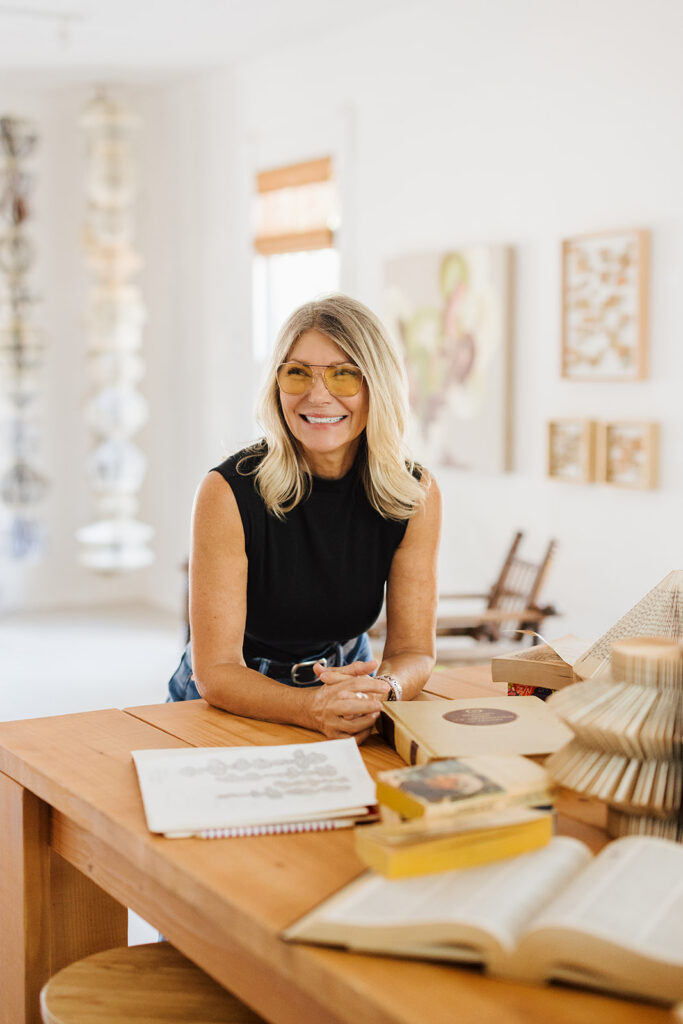
To some, a book is read… then placed on a bookshelf to never be opened again…or passed along for someone else to enjoy. For Karen Hawkins, the book is much more than a container for words. It’s an object with history, texture, memory, and physical presence. In her hands, pages can be folded, gathered, layered, suspended, and transformed into sculptural forms that are at once contemporary and deeply nostalgic.
“I’m drawn to books not simply due to the written words found on each page but rather the perfect construction maintained over centuries past,” Hawkins explains. “So often, books become objects of acquisition, sitting on shelves to be shown off or referenced, made obsolete by the passing of time.”
That tension, between the beloved traditional book and an increasingly digital world, is at the heart of her practice.
A graduate of The University of Texas, Hawkins is a contemporary sculptor whose work encompasses sculptural wall pieces, suspended installations and large-scale, site-specific commissions. Her work has found its way into private collections and prominent residential, hospitality and corporate environments throughout the country.
From Reading Material To Raw Material
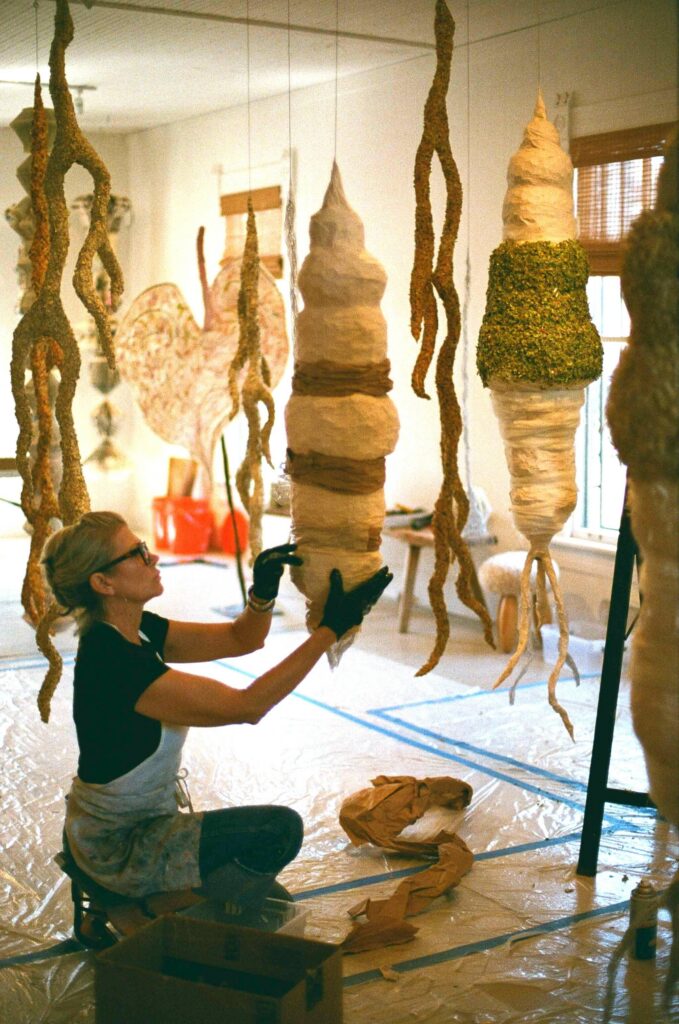
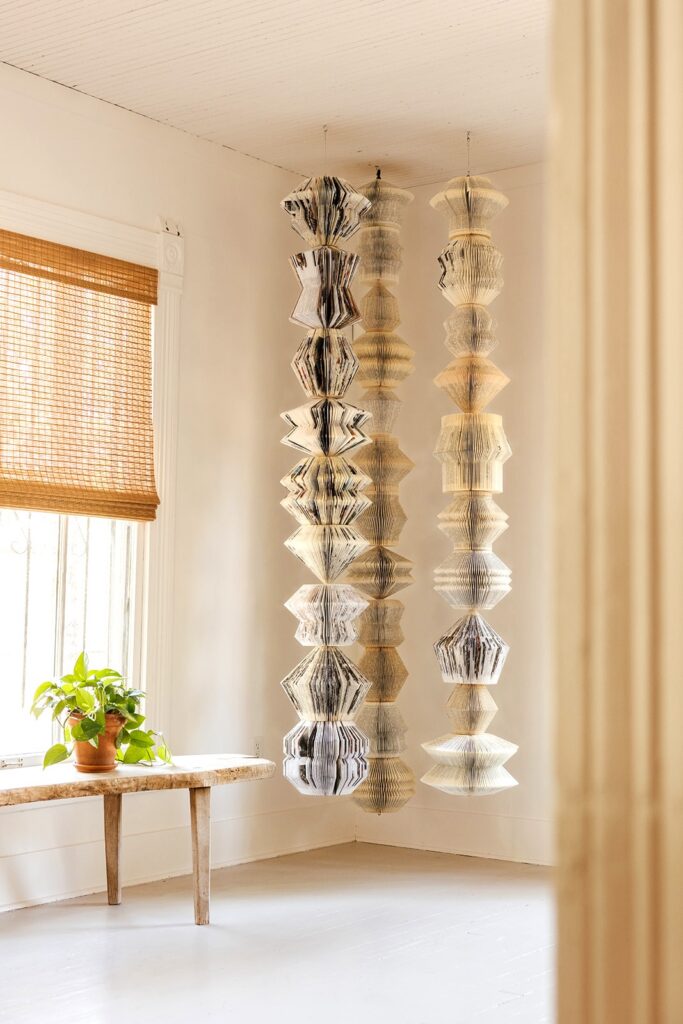
It might just be the most artistic form of sustainability yet. Karen Hawkins describes her approach as an “archaeological exploration” of the book’s structure and content. Rather than treating a book as something precious that must remain intact, she investigates what happens when its familiar architecture is disrupted.
“The journey begins by changing the book’s structure, challenging its physical boundaries,” Hawkins says. “Each book transforms into an object, not of literature or science or history any longer, but an object of art.”
The result can be surprisingly architectural.
Her body of work includes Totems, Mandalas, Paper Nests, Tethered Romance, Jellyrolls, Peace, Wax Works, Tic Tacs, Book Gems and Forms, and book-cover and paper collages. Her recent work shows how far she has pushed the humble page beyond its original purpose. Her Pedestaled Totem, for example, is a 2026 hand-folded paper sculpture measuring 54 inches high.
The visual language is often rhythmic and repetitive, yet the material carries traces of its former identity. A vintage yearbook, old reference book, or collection of romance novels can retain an almost ghostly sense of its former life even after Hawkins has transformed it.
That is part of the magic. The viewer recognizes the material…and then realizes it has become something entirely unexpected.
The Sensory Side Of A Book
For Karen Hawkins, the attraction to books is also tactile.
In an earlier interview, she described herself as something of a “book junkie,” explaining that when she sources material, she first considers how it feels in her hands. The paper’s physical characteristics matter enormously because each sculptural process requires a different degree of flexibility and resilience.
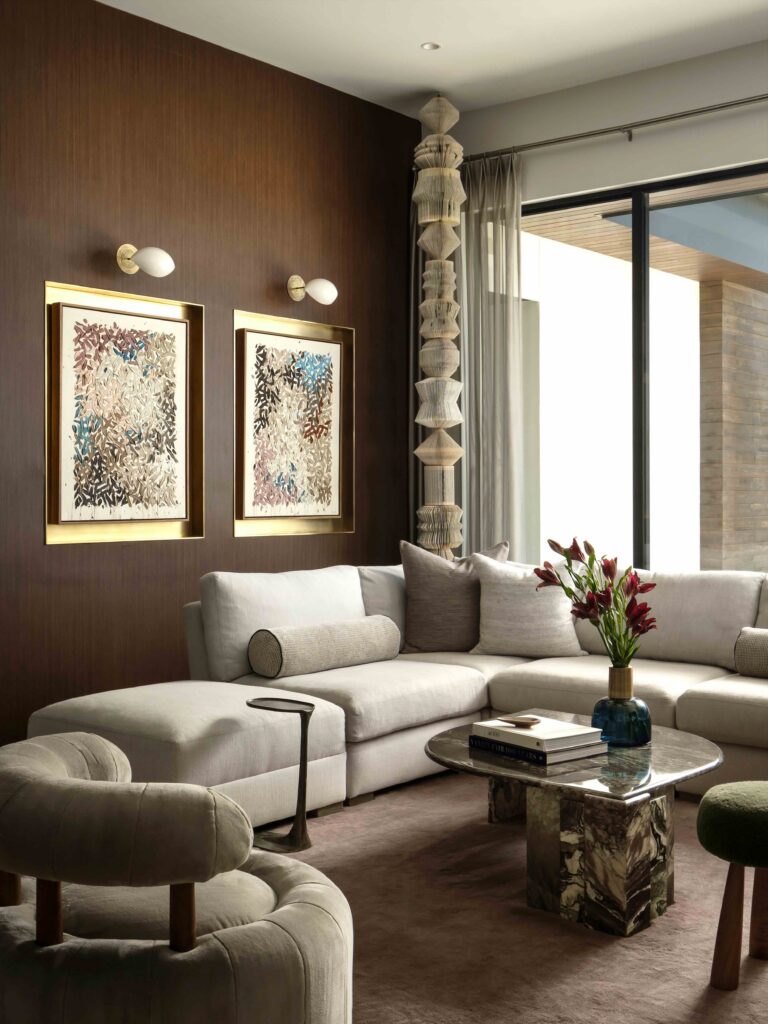
“In my childhood they were my escape,” Hawkins has said. “I traveled the world through books. I still love to touch them and smell them.”
That observation offers a particularly revealing key to her work. Her sculptures may be contemporary, but their emotional vocabulary is rooted in something intimate and familiar: the experience of holding a book.
In a world of screens, swipes and digital downloads, Hawkins makes art from the physical evidence of reading.
An Austin Studio With Room To Grow
Like many creative enterprises, Karen Hawkins Studio began much more modestly. Hawkins initially worked from a garage and spare room before the growing scale of her practice required a dedicated studio. In 2021, she and her team moved into a 1,000-square-foot studio on her property. The studio has since evolved into a larger East Austin studio and showroom where artwork is created, developed, and presented to collectors, designers, architects, and clients.
The studio has also become a place for collaboration.
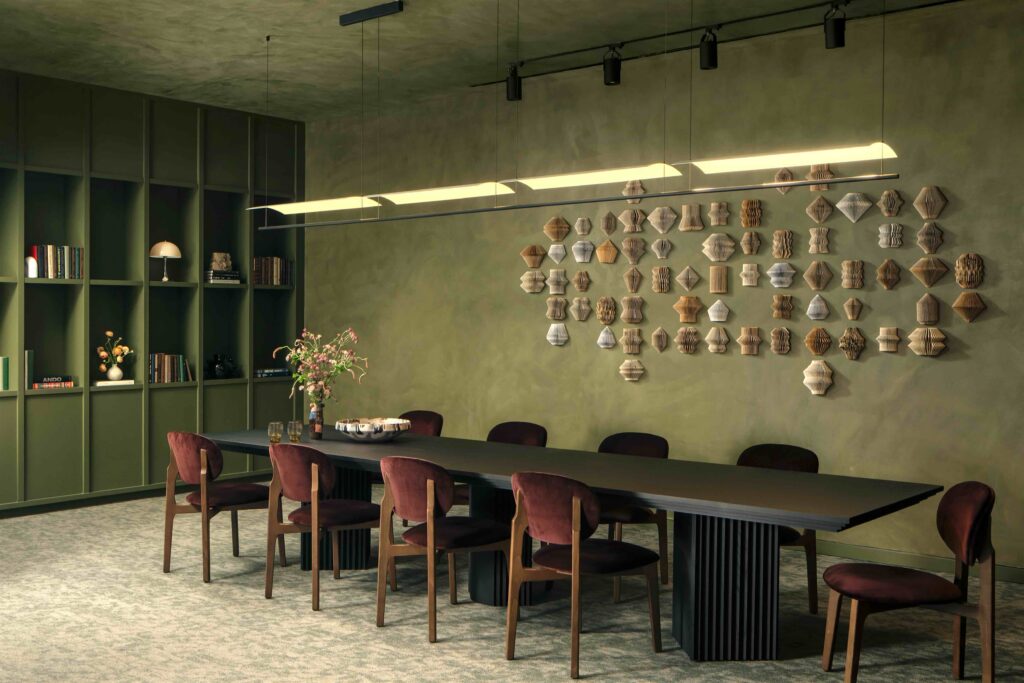
Hawkins has worked with architects and interior designers including Fern Santini, Kasey McCarty Interior Design, Michael Hsu Office of Architecture, Ryan Street Design, Kelly Contine, Anita Hubbard, and Studio Seiders. Her commissioned projects have included spaces associated with the W Hotel Austin, Archer Hotel Austin, Facebook’s Austin corporate office, Kendra Scott’s Austin flagship, Lumos Pharma, Museum Tower in Dallas, and Dayton Children’s Hospital in Ohio.
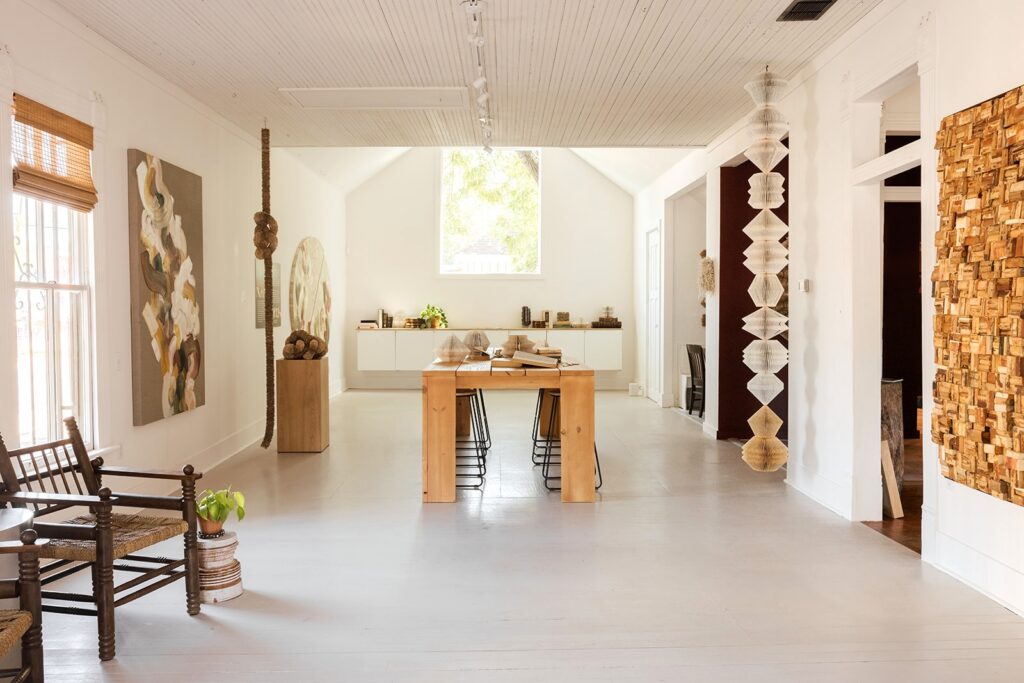
This intersection of art and design is particularly well suited to Hawkins’ work.
Her sculptures can function as focal points, architectural interventions, and highly personal statements within an interior. The scale can shift dramatically… from intimate framed works to installations that command an entire room.
When Art Becomes Architecture
Hawkins’ process has an intriguing architectural quality.
She accumulates, folds, stacks, and re-contextualizes material until a new visual landscape emerges. The individual components may be ordinary, even overlooked, but their repetition creates something monumental.
That approach was evident in exhibitions such as Art of Paper, presented by Laura Rathe Fine Art, where Hawkins was included alongside an international roster of artists exploring paper as a medium. Her works Blue Jelly Rolls and Sunset Tictacs were featured in the 2023 Dallas exhibition.
Her work has also appeared in exhibitions focused specifically on the book and paper as artistic material, including The Art of the Book and Paper Trails.
The Pink Bow Project
Perhaps no work in Hawkins’ career demonstrates the emotional power of her material language more profoundly than The Pink Bow Project.
First presented in Austin in 2018, the large-scale multimedia installation uses 51,660 pink hair bows mounted across 52 translucent panels. The bows represent the number of substantiated sexual-abuse cases involving young girls reported annually to national child-protection agencies at the time the project was created.
The installation is intentionally immersive. Visitors move through the hanging panels while an audio component brings forward the voices of survivors, each identifying themselves by first name and the age at which their abuse occurred.
The work grew out of Hawkins’ own experience as a survivor. “The Pink Bow Project was created from a deeply personal space,” she says. “The impetus came from the explosion of voices in 2016 speaking out about sexual assault, exploitation, and childhood sexual abuse.”
She describes the process as one of reclaiming power and transforming an isolated personal experience into something collective. “The Pink Bow Project shifts my story from an isolated trauma to a shared, transformational experience with other survivors,” Hawkins says. “In it, I found my space to speak… to say my name out loud.”
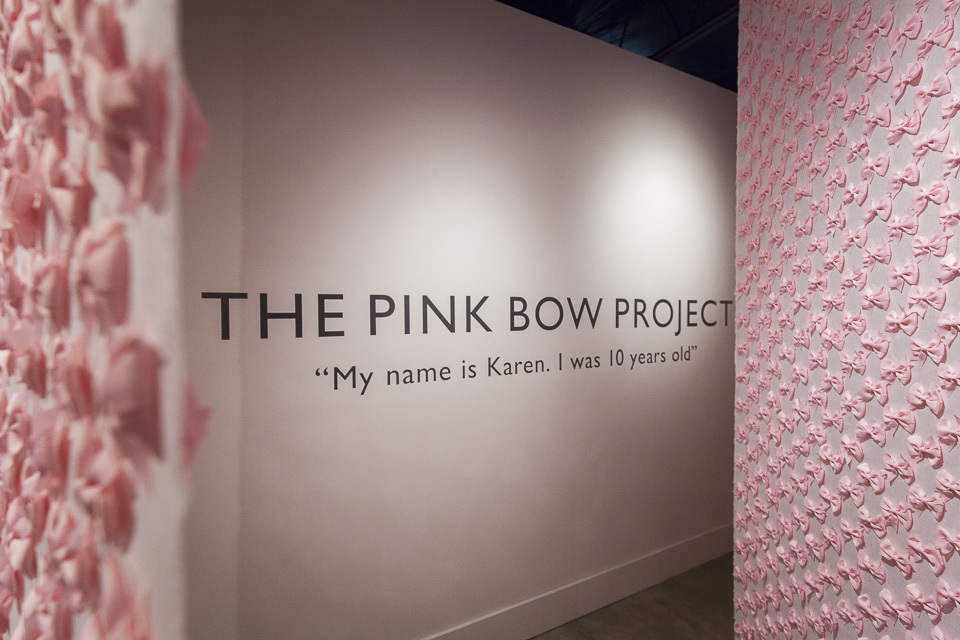
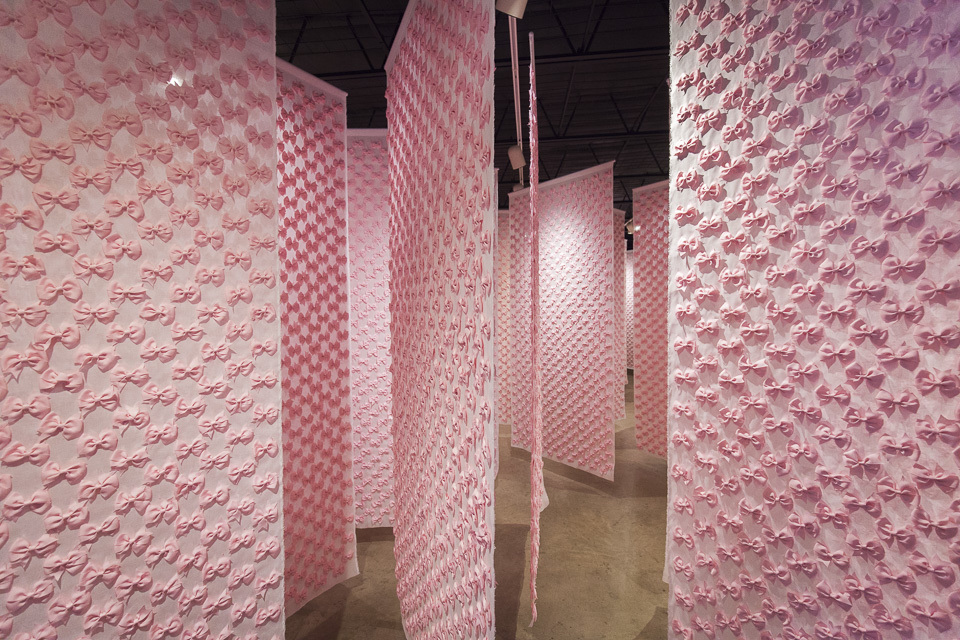
The installation has subsequently become more than a single artwork. In 2024, Hawkins established The Pink Bow Project as a 501(c)(3) nonprofit, with plans to expand its reach as a traveling exhibition and create additional opportunities for survivors to participate. And, as luck would have it, The Pink Bow Project™ by Karen Hawkins Studio returns to Austin with an opening reception on Thursday, November 5, 2026, running through January 1, 2027.
The True Beauty Of Reinvention
A fascinating consistency links Hawkins’ quieter book sculptures and the emotional scale of The Pink Bow Project. Both are about transformation.
A book that once served a specific function becomes sculpture. A material associated with childhood innocence becomes a symbol of collective experience. Something discarded becomes something worth looking at again.
That may be the most compelling thread running through Hawkins’ work: nothing is necessarily finished simply because it has finished its original purpose.
The book can become art. The fragment can become a whole. The memory can become a voice. And the studio itself can become a place where disciplines, people and ideas intersect.
Building A Creative Legacy
Today, Hawkins operates not simply as an individual artist but through an expanding studio practice. Her team includes Studio Director Melissa Fabbio, her daughter, and production and studio assistants who help translate Hawkins’ ideas into increasingly ambitious works and installations.
The studio’s growth mirrors the evolution of Hawkins’ art: what began with discarded books and a highly personal fascination with their physical structure has become an increasingly sophisticated practice connecting contemporary sculpture, interior design, architecture, collecting and social engagement.
And perhaps that is why her work resonates so strongly.
Everyone has a relationship with a book. Everyone understands nostalgia. Everyone knows what it means to hold onto something because it carries a memory.
Hawkins simply gives those ideas a new physical form. In an era when so much of life exists somewhere in the cloud, her art insists on the power of the tangible.

Paper can still matter. Objects can still tell stories. And sometimes, the most unexpected way forward is to turn the page, literally, thanks to the talents of artist Karen Hawkins.
Curated Texan’s 7 Favorite Things to Know About Artist Karen Hawkins…
- She Turns Books Into Sculpture. Hawkins dismantles the book’s conventional function, transforming pages, covers, and paper into three-dimensional art.
- Her Art Begins With Texture. The feel, flexibility, and physical character of paper are integral to her creative process.
- She Is a UT Graduate. The Austin artist has built a nationally recognized contemporary sculpture practice from her Texas home base.
- Her Studio Is a Creative Ecosystem. Her East Austin studio brings together artists, collectors, designers, architects, and clients.
- Her Work Lives in Major Spaces. Commissions have appeared in hospitality, corporate, healthcare, and residential environments, including the W Hotel Austin and Kendra Scott’s Austin flagship.
- The Pink Bow Project Is Deeply Personal. Her powerful multimedia installation transforms thousands of pink bows into a statement about childhood sexual abuse and survivor empowerment.
- She Believes in Reinvention. Whether working with an obsolete book or an emotionally charged symbol, Hawkins continually asks what something can become when its original purpose changes.