 Lance Avery Morgan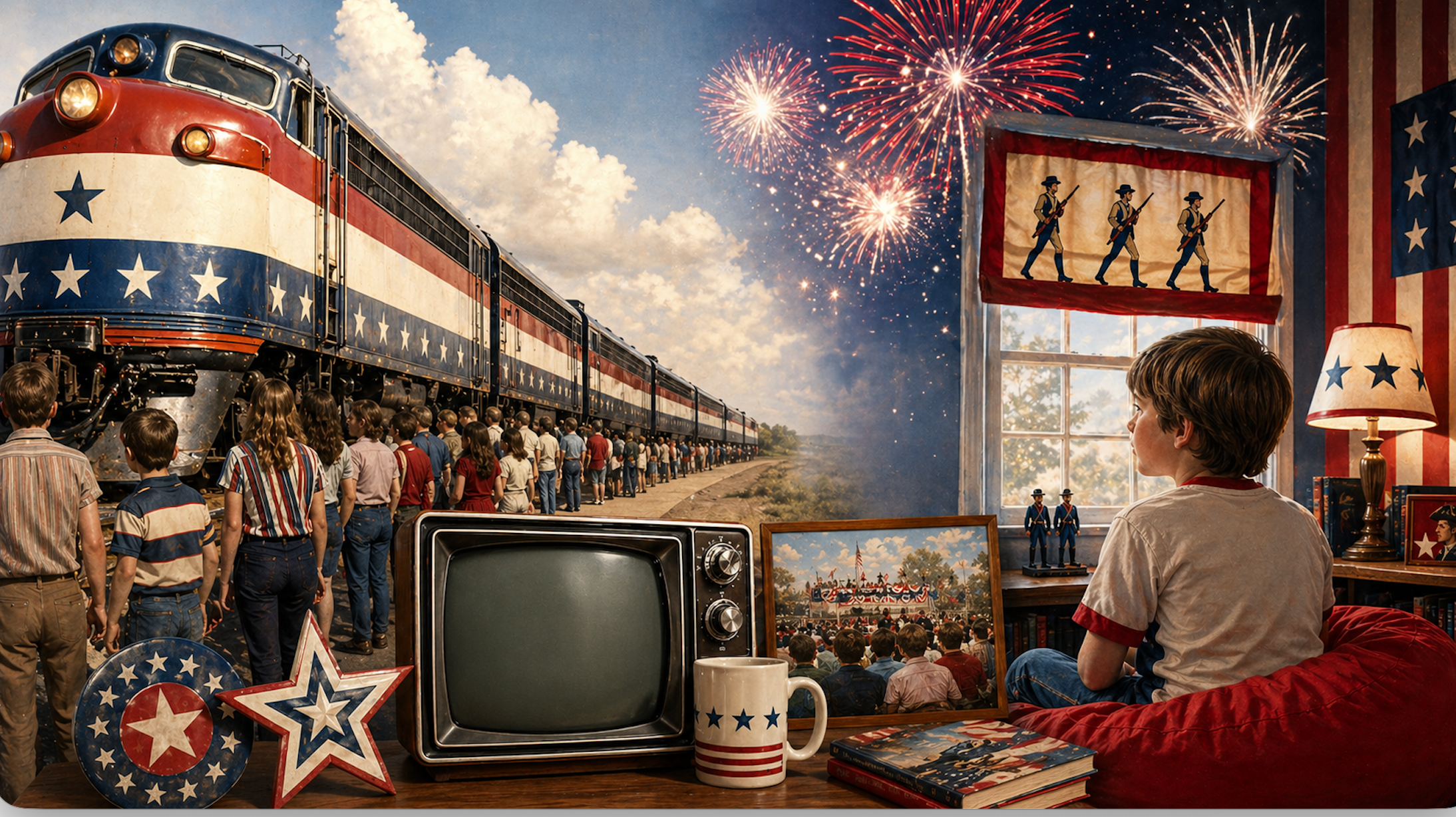
As The Nation Celebrates Its 250th Anniversary On July 4th, We Look Back At The Bicentennial Of 1976… When History Came Alive On Rails, In Living Rooms, And Even In Childhood Bedrooms Painted Red, White, And Blue
There are anniversaries, and then there are major anniversaries, like the upcoming America’s 250th birthday; the kind that don’t just pass through a calendar but seem to ripple through the culture like fireworks you can still hear long after the sky goes dark, as our pop culture history buff Lance Avery Morgan shares.
The Bicentennial of 1976 was one of those moments. It was less a holiday and more a national mood swing: part history lesson, part traveling circus, part collective identity check-in. And as the United States approaches its 250th anniversary on July 4th, 2026, it feels only fitting to look back at the way America once celebrated its 200th… with enthusiasm, imagination, and a slightly theatrical sense of self.
Because in 1976, America didn’t just remember its history. It performed it.
The Freedom Train: History On Wheels
If you were alive in 1976, or even just lucky enough to be the child of someone who insisted on stopping everything to watch it, you probably heard about the Freedom Train.
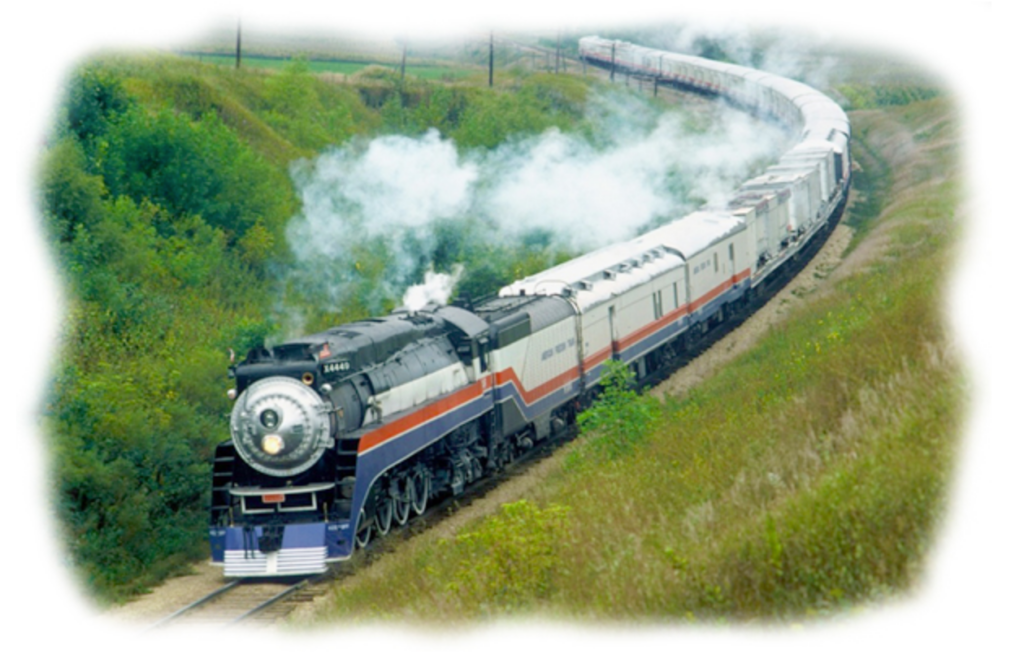
It wasn’t subtle. It didn’t try to be anything less than mobile history, magnificently presented
This was a gleaming, red, white, and blue traveling museum that crossed the country like a rolling declaration of independence. Inside its cars were original artifacts from American history: documents, flags, cultural relics, and objects that stitched together the nation’s first 200 years like a very determined scrapbook with locomotive horsepower.
For many Americans, this was the first time history didn’t feel like something locked behind glass in a distant museum. It came to you. It rolled into your town like it had business there. And in a way, it did.
The Bicentennial Minute: History Between Commercial Breaks
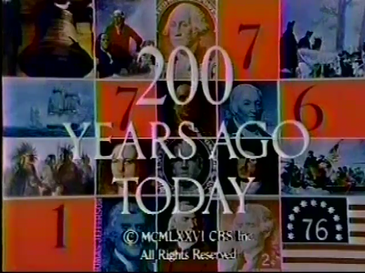
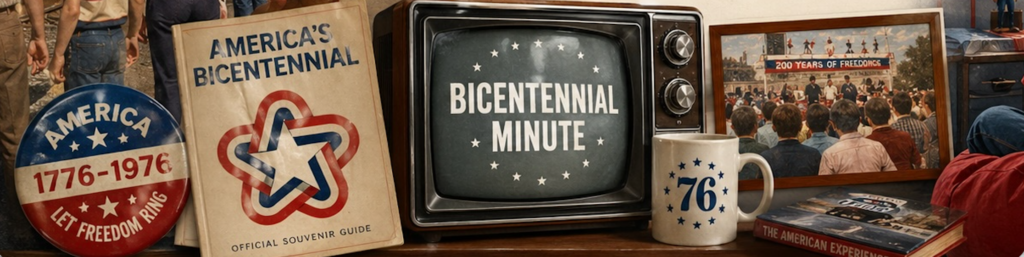
Then there was the Bicentennial Minute; those nightly televised vignettes that interrupted America’s regularly scheduled programming to remind everyone that history was not, in fact, over.
Each minute spotlighted a figure, moment, or slice of Revolutionary-era life: war heroes, founding debates, battlefield decisions, and the human stories behind the country’s fight for freedom from English oppression.
It was brief. It was dramatic. And, boy, did it work.
For sixty seconds at a time, with a wide range of celebrities recounting historical facts and anecdotes, Americans collectively nodded at their televisions and thought, Ah yes, this is who we are.
Then they went back to sitcoms.
Boston Harbor: A Nation at Full Sail
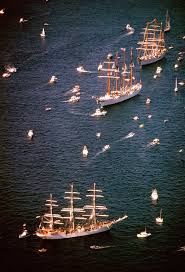
And of course, there was Boston Harbor, the stage upon which the Bicentennial became something almost cinematic.
Tall, period ships crowded the water like ghosts returning home, their sails filling with both wind and memory. The harbor transformed into a floating tribute to the nation’s beginnings, where maritime history met modern celebration in a spectacle that felt less like an event and more like a living painting.
It was America looking at itself and deciding, for once, not to be modest about it. It would hopefully be smooth sailing ahead.
Texas, 1976 & The Bedroom That Took It Personally
But Bicentennial fever didn’t just live in museums or harbors. It made its way into homes… into bedrooms that became personal shrines to the moment.
Somewhere in Texas, the memories of one such room still tell the story.
A red, white, and blue Bicentennial-themed bedroom, carefully curated with the seriousness of a national exhibit and the enthusiasm of childhood conviction. Revolutionary Minute Men decals line the window shades like silent sentinels.
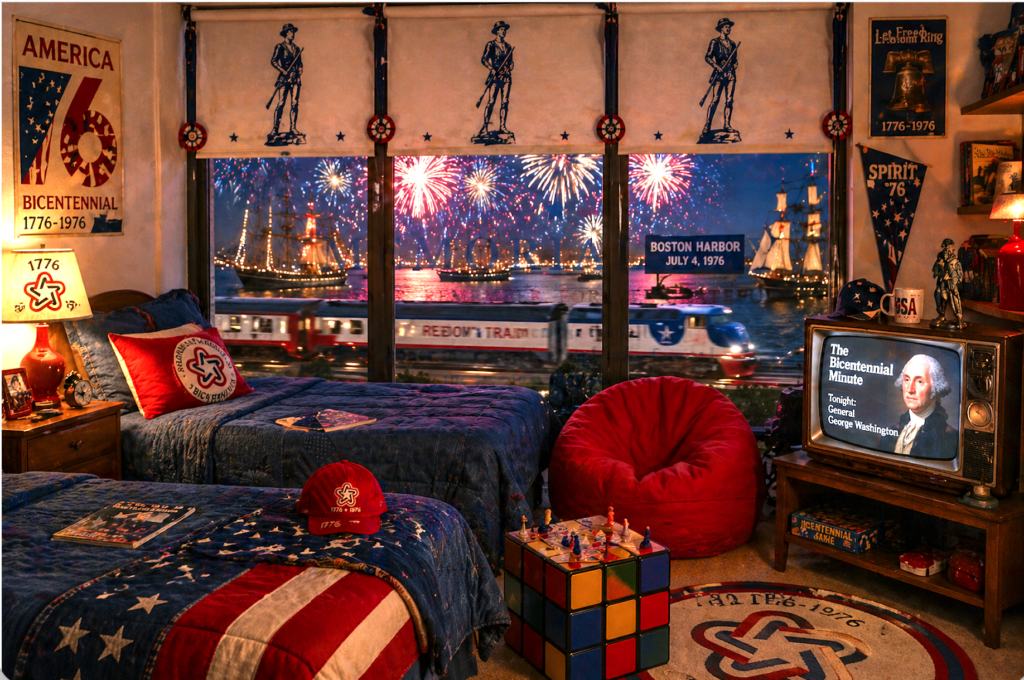
The bedspread, denim blue, grounds the space in something both patriotic and strangely stylish, even by today’s standards. A red bean bag sits nearby like a punctuation mark: informal, proud, and slightly rebellious, perched next to the blue radio that blared KNOW-AM 1490 (The Now Sound Of Austin) for hours a day. And the game cube table? That’s where imagination and after-school freedom met somewhere between board games and plastic dice.
It wasn’t just décor. It was identity training wheels.
That room, like so many across the country in 1976, was proof that the Bicentennial wasn’t only something Americans watched; it was something they lived inside.
Getting Presidential
As the United States continued to mark its Bicentennial, the LBJ Presidential Library in Austin joined the national celebration by leaning into what it does best: bringing history into immediate, tangible focus for the public.
At the time, the Library served as both a presidential archive and a civic gathering space, and its Bicentennial programming reflected that dual role. Special exhibitions were curated from the Johnson administration’s records, highlighting key moments in the nation’s “modern founding era” of civil rights legislation, the Great Society initiatives, and the cultural upheavals of the 1960s that shaped America’s 20th-century identity.
Throughout 1976, visitors experienced expanded public displays that connected the Revolutionary spirit being celebrated nationwide to more recent chapters of American change. The Library also participated in Bicentennial-themed educational programming, hosting students, scholars, and community groups for discussions and tours that placed the founding ideals of 1776 alongside the evolving democratic experiments of the Johnson years.
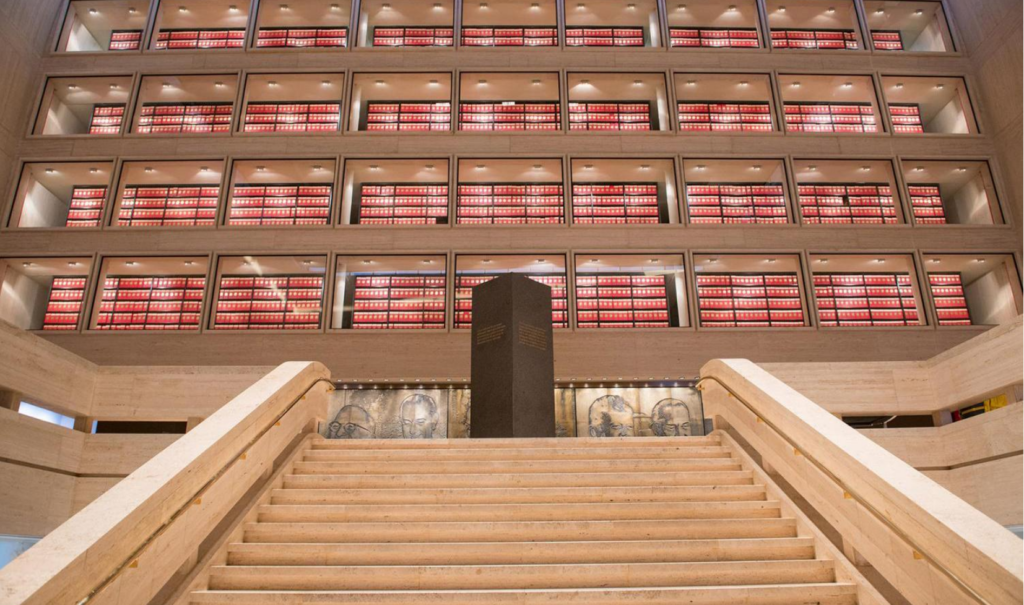
In keeping with the national mood, where everything from the Freedom Train to nightly Bicentennial Minutes turned history into a living broadcast, the LBJ Library positioned itself as a Texas-based anchor for reflection. It offered Austinites and visitors alike a chance to see that the story of the United States wasn’t preserved only in Philadelphia or Boston, but was also actively interpreted in places like Austin, where the past was continually re-examined through the lens of modern governance and public memory.
250 Years Later: The Echo Returns
Now, as the nation approaches its 250th anniversary, the question isn’t just how we celebrate, but how we remember how we used to celebrate.
Today’s America has drones instead of Freedom Trains, streaming instead of Bicentennial Minutes, and digital skylines instead of harbor spectacles. But the core impulse remains unchanged: the desire to pause, look back, and ask what it means to be here together at all.
Texas, as always, understands that duality better than most. It knows how to throw a celebration that fills the sky—and still make room for reflection underneath it.
Because whether it’s 1976 or 2026, whether history comes alive on rails or on screens, the point is the same: America is always, in some way, remembering itself in real time.
And sometimes, if you’re lucky, it even starts in a bedroom with a red bean bag chair, a few Minute Men on the windows, and a kid who already knows, long before the fireworks, that history is something you can live inside.
10 Ways America’s 250th Anniversary Is Being Celebrated Across the Nation
1. National Kickoff Ceremonies
Cities across the U.S. are launching multi-year celebrations leading up to July 4, 2026, with parades, speeches, and historic tributes.
2. State-by-State Heritage Exhibits
Museums and cultural institutions are spotlighting regional stories that shaped the American journey over the past 250 years.
3. “Semiquincentennial” Reenactments
Historical reenactments are bringing the Revolutionary era to life in towns and historic sites nationwide.
4. Traveling Freedom Festivals
Mobile festivals are touring major cities, blending music, food, and storytelling rooted in American history.
5. Monument Restorations & National Preservation Projects
Landmarks, battlefields, and historic buildings are receiving major restoration efforts in honor of the milestone.
6. Digital Time Capsules of America
Communities are contributing photos, letters, and videos to online archives capturing life in 2026 America.
7. Presidential Library Special Exhibits
Presidential libraries are unveiling curated exhibits reflecting on leadership, democracy, and national evolution.
8. Fireworks Spectaculars & Nationwide Broadcast Events
Independence Day 2026 will feature synchronized fireworks displays and national televised celebrations.
9. School & Youth “America 250” Curriculum Initiatives
New educational programs are helping students explore American history through interactive storytelling and civic engagement.
10. Community Storytelling Projects
From small towns to major cities, Americans are sharing personal and family histories that connect to the national narrative.