
 Mary Schneider
The Most Powerful Transformation Begins When We Identify The Invisible Structures Shaping Our Behavior
Images courtesy of Curated Texan
Healing rarely begins with a breakthrough… it begins with a pattern. As Resonance Repatternist Mary Schneider, founder of Repattern It, often observes, the behaviors we struggle against are not random flaws but deeply embedded energetic imprints formed long before we had language for them. Beneath our habits, reactions, and recurring relationship dynamics lies an invisible architecture quietly shaping the design of our lives. When we learn to recognize those patterns, not judge them, not suppress them, but truly see them, we begin the delicate and transformative work of reweaving the tapestry of who we are.
Our lives are not random; they are woven. Awareness allows us to reweave. Healing does not erase the past; it reveals the pattern beneath it. For years, the metaphor that has most accurately captured my understanding of life is tapestry.
When I picture a human life, I do not see a straight path or a carefully engineered blueprint. I see an intricate, antique wall hanging, layered in texture, shadow, and color. From a distance, the image appears whole. But upon closer inspection, there are threadbare sections. Subtle gaps. Places where the design feels incomplete.
Healing, I have come to believe, is not about discarding the tapestry. It is about studying it closely enough to understand the pattern, and then consciously restoring what has long gone unnoticed.
Structure Beneath The Surface
In traditional tapestry, two sets of threads create the whole: warp and weft. The warp threads are stretched vertically across the loom. They are foundational, structural, and largely hidden. The weft threads pass horizontally over and under the warp, forming the visible design. While in India, I saw visible design, literally, at a beautiful traditional wedding ceremony, symbolizing the tapestry of that country.
What makes tapestry remarkable is that the image is not embroidered onto the fabric. It is built into its very structure. Human behavior operates in much the same way.
Contemporary neuroscience suggests that a significant percentage of our daily decisions, some estimates say as high as 90 percent, are driven by unconscious processes. Long before conscious thought enters the scene, the brain is scanning for familiar patterns. Early attachment experiences shape neural wiring in areas responsible for emotional regulation, trust, and threat detection. By early childhood, many of our relational templates are already in place.
These foundational templates are the warp. The visible events of our lives, the careers we pursue, the relationships we sustain, the conflicts we repeat, are the weft. The essence of healing lies in recognizing the warp threads that quietly structure everything else.

Where Patterns Begin
Behavioral patterns rarely arise in isolation. They develop from a combination of early attachment experiences, trauma (both dramatic and subtle), parental modeling, cultural imprinting, and genetic predispositions.
The landmark Adverse Childhood Experiences (ACE) study revealed a strong correlation between early adversity and long-term physical and emotional health outcomes. The higher a person’s ACE score, the greater the likelihood of experiencing anxiety, depression, addiction, and even chronic disease later in life.
Trauma researcher Bessel van der Kolk has written extensively about how the body encodes unresolved experience, influencing behavior long after conscious memory fades. These early imprints become automatic responses, protective strategies formed when we were young and far less resourced.
The remarkable truth, however, is this: awareness changes the design. Thanks to neuroplasticity, the brain retains the capacity to rewire throughout life. When we consciously observe a recurring pattern and choose a different response, we quite literally begin weaving new neural threads.
Recognition becomes restoration.
A Pilgrimage Into Stillness
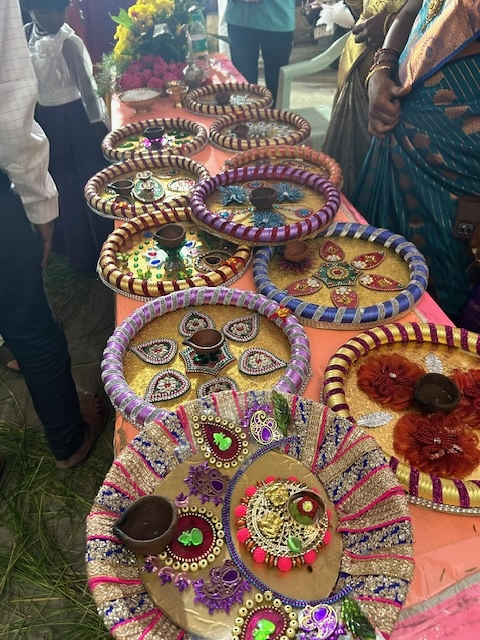

It was this understanding that led me to Tiruvannamalai in South India, a centuries-old spiritual center anchored by the sacred mountain Arunachala. The town has long drawn seekers, including the revered sage Ramana Maharshi, whose central teaching was radical self-inquiry: Who am I?
I intended to deepen my spiritual practice.
What unfolded was something far more revealing.
Removed from routine and familiar identity, immersed in contemplative silence, I encountered parts of myself that had long shaped my life from beneath the surface.
The warp threads became visible.
Pattern One: The Outsider
The first revelation was a deeply embedded belief that I did not belong.
For much of my life, I experienced a subtle but persistent sense of standing just outside the circle, observing rather than inhabiting. Even in moments of inclusion, there was an undercurrent of separateness.
Belonging is not a superficial desire. Psychologist Abraham Maslow identified it as a foundational human need, situated just above safety in his hierarchy. More recent research on social exclusion demonstrates that the brain processes rejection in a manner similar to physical pain. Chronic loneliness has been linked to increased stress hormones, weakened immune response, and heightened mortality risk.
And yet, despite outward competence and connection, the internal narrative of exclusion persisted.
Seeing this belief clearly, without defensiveness, without dramatization, was transformative. It stood apart from my identity. It revealed itself as a strategy, perhaps once useful, now outdated.
When I separated from the pattern, I could offer compassion to the younger self who had formed it. And in doing so, something unexpected occurred: the sense of belonging I had sought externally began to arise internally.
The tapestry shifted.

Pattern Two: Guarding The Spirit
The second pattern was subtler but equally powerful: a recurring sense that others might attempt to diminish or “break” my spirit.
As a child, vigilance can be adaptive. The amygdala, the brain’s threat-detection center, responds quickly to perceived danger. Protective responses: defensiveness, hyper-independence, and emotional withdrawal can preserve integrity during vulnerable years.
But the nervous system does not automatically update itself.
Without awareness, protective strategies become default settings. What once ensured safety can later obstruct intimacy, collaboration, and trust.
In the contemplative quiet of India, I saw that this guarding of my spirit was no longer necessary. The strength I once equated with resistance could evolve into steadiness without armor.
The revelation was simple yet liberating… I have nothing to prove.
My spirit is not fragile. It is resilient.
And resilience does not require constant defense.
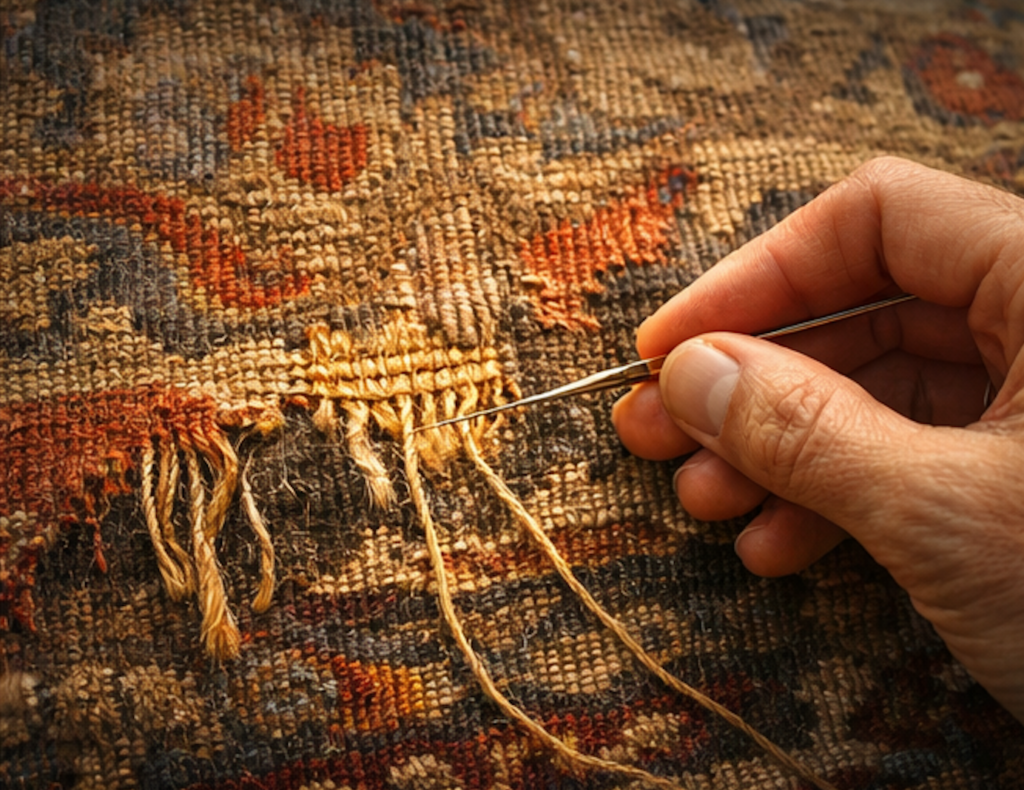
The Ongoing Work Of Reweaving
Did I need to travel across the world to see these patterns clearly? Perhaps not in theory. But disruption of environment, routine, and identity often loosens the weave enough for the underlying structure to reveal itself.
Pilgrimage, whether geographic or psychological, interrupts autopilot.
The deeper truth is this: pattern recognition is not a one-time event. It is a practice. New threads surface. Old ones resurface in subtler forms. Each time they are met with awareness rather than avoidance, the design becomes more coherent.
Healing does not mean erasing the past. It means integrating it.
The tapestry of a life is never flawless. Nor is it meant to be.
But when we dare to study the warp beneath the weft, to identify the patterns that shape our behavior, we reclaim authorship of the design.
And with that reclamation comes something profound.
More presence. More freedom. More peace.
Thread by thread.
For more information on connecting with Mary Schneider and Resonance Repatterning, visit here.
Note: The information provided here is for educational and informational purposes only. It should not be considered as advice. Readers should consult with a professional advisor before making any decisions. All opinions expressed in this blog post are solely those of the author and do not reflect the views of any affiliated organizations. Readers are encouraged to conduct their own research and due diligence.